India

Is the magic of BJP and Narendra Modi ending in India?

The BJP had governments in 21 states in India till March 2018. In some states, the BJP was in government on its own and in some states it was running the government with the help of allies.

There were a total of 29 states in India before being divided into two union territories of Jammu and Kashmir in 2019. The number of union territories was 7. Now the number of states has come down to 28. The number of union territories has increased to 9.

After the formation of NCP, Shiv Sena and Congress governments in Maharashtra, BJP has been out of power in another state.

Maharashtra is the latest setback for the BJP after losing in the 2018 assembly elections in Madhya Pradesh, Rajasthan and Chhattisgarh.

It is not the first time for a single political party to be in this number of state governments in India. In 1993, the Congress Party had governments in 16 of the 26 states in India. In 15 of these states, Congress was in power on its own.

The Bharatiya Janata Party was in power in seven states before Prime Minister Narendra Modi came to power in India in 2014.

By March 2018, the BJP was able to form a government in 21 states, growing rapidly. The BJP tripled in four years.

In 2015, BJP joined hands with PDP to form government in Jammu and Kashmir. PDP 28, BJP 25, National Conference 15 and Congress 12 seats were won in these elections. At that time, Jammu and Kashmir had a total of 87 assembly seats.

This was the first time that the BJP was in government alone or with its allies in the entire North India except Punjab.

But the BJP's expansion began to stall from 2018, when the Congress alliance formed the government in Karnataka. However this government did not last long and after some time BJP again formed the government in the state.

After the recent results of Maharashtra, it is clear that BJP and its allies are losing grip in the states.

However, the number of states where BJP has been out of power in a year is not very large. But it cannot be denied that the BJP has been out of power in the big states of India, Maharashtra, Rajasthan and Madhya Pradesh, which is a big setback for the BJP.

These are states in which the BJP and its allies have a strong hold. The population of these states is also much higher than many other states.

According to the census data of 2011, the total population of the states where BJP was in government in 2018 was around 84 crores. That is, BJP ruled over 70 percent of the total population of India.

After the defeat in the recent elections, the BJP's state governments are ruling over 47 percent of India's population. That is, there has been a decline of about 23% since 2018.

The eyes are now on the Jharkhand elections to be held in December, where the BJP is trying to return to power again.

But is it difficult to say whether this will happen?

Bribery and illegal commissions in New India are called electoral bonds: Rahul Gandhi

Rahul Gandhi, former Congress president in India, has launched a fresh attack on the Modi government at the Center regarding electoral bonds. He wrote in a tweet, "Bribes and illegal commissions in New India are called electoral bonds."

Rahul Gandhi shared the Huffington Post news with his tweet, stating that the RBI had raised questions in disagreement over the electoral bond.

Earlier, Congress had accused the Modi government of introducing electoral bonds, bypassing the RBI, so that black money can be brought to the BJP's fund. The Congress also demanded an immediate end to the plan.

At the same time, Congress General Secretary Priyanka Gandhi also said that, bypassing the Reserve Bank, electoral bonds were brought so that black money could reach the BJP.

Through the tweet, Priyanka wrote, "Bypassing the RBI and dismissing national security concerns, the electoral bond was approved so that the BJP could reach black money. It seems that the BJP was chosen in the name of ending black money, but it started filling its pockets with it. This is a deplorable deception of the people of the country.''

Will the Modi government sell Air India and Bharat Petroleum by March?

The Indian government is considering selling the state-run airline Air India and the government oil refinery Bharat Petroleum Corporation by March.

India's Finance Minister Nirmala Sitharaman told the Times of India in a special interview that the government wants the sale process of Air India and Bharat Petroleum Corporation Limited (BPCL) to be completed by March.

Sitharaman said, "We are hoping that we will complete them by the beginning of next year."

The Finance Minister also said that the government will benefit one lakh crore in this financial year by selling these two companies.

The government had also planned to sell Air India last year, but at that time investors had not shown much enthusiasm in buying Air India so it could not be sold.

Sitharaman told the Times of India that the excitement of investors has been seen even before the start of the sale process of Air India.

Governments failing to perform duty: Supreme Court

India's Supreme Court on Monday termed air pollution as a 'serious violation of the fundamental right to live', saying that state governments and local bodies had failed to 'perform their duties'.

The Supreme Court has summoned Chief Secretary of Punjab, Haryana and Uttar Pradesh regarding burning of stubble and pollution.

Also, the Supreme Court has directed that if a person in Delhi NCR is found violating the prohibition on construction and demolition, then he will be fined Rs one lakh. Burning garbage will result in a fine of five thousand rupees.

The court has asked the central government and Delhi government to take steps to control pollution with the help of experts. The next hearing of this will be on Wednesday 6 October.

The Supreme Court said, "Every year Delhi is choking and we are not able to do anything."

The court said, "This is happening every year and this situation continues for 10-15 days. This should not happen in civilized countries."

The court also said that "the right to live is the most important. This is not the way we can live. The center and the state must take steps for this. We cannot be allowed to walk like this. Enough is enough."

The court said, "There is no corner safe to live in this city. Not even at home. Because of this we are losing significant years of our life."

For the past several days, air pollution in Delhi and surrounding cities has reached extremely poor levels. The air quality (air quality / AQI) in Delhi on Sunday also crossed 1,000 figures. With this, 'Health Emergency' was implemented in Delhi. Due to pollution, schools in Delhi and adjoining cities have been declared a holiday till November 5.

The court also asked questions to the Delhi government regarding the 'Odd Even' scheme implemented from Monday and said that they should keep the data in front of the court on Friday and inform them that this 'scheme has reduced pollution'.

A bench headed by Justice Arun Mishra asked the Delhi government, "What is the logic behind the Odd Even Scheme? We can understand the ban on diesel vehicles but what does the Odd Even plan mean?"

Justice Mishra said, "Cars cause less pollution. What are you (Delhi Government) getting from Odd Even?"

The Supreme Court asked the Center and Delhi government to inform them about what they are doing to change the situation.

The court said, "The situation is appalling." What do you want to do to reduce pollution as the central and Delhi government? People are dying and will they keep dying like that? "

The Supreme Court said, "Every year such things are happening under our noses. People are being advised not to come to Delhi or leave Delhi. The state government is responsible for this. People will live in their state and neighboring states. Are losing. We will not tolerate it. We are making fun of everything. "

During the hearing, Amicus Curiae Aparajita Singh told the court that the entry of trucks in Delhi should be stopped. Only those trucks that are carrying essential everyday items should be allowed to come.

Environmentalist Sunita Narayan said that Punjab is the biggest source of pollution. She said that action or message should be clear in this case.

Pakistan rejected the new map of India

After dividing Jammu and Kashmir into two union territories, Pakistan has rejected the new political map released by India.

On August 5, 2019, Article 370 of the Constitution giving special state status to Jammu and Kashmir was neutralized by India. Along with this, it was also decided to divide the state into two union territories - Jammu and Kashmir and Ladakh.

After this decision, both the union territories came into existence on 31 October. After this, the Home Ministry of India released a political map on 2 November 2019, which Pakistan rejected.

This map also shows parts of Gilgit-Baltistan and Pak-administered Kashmir under both the new union territories.

Pakistan has termed parts of Pakistan-administered Kashmir and Gilgit-Baltistan within India's territorial jurisdiction as erroneous, legally unconfirmed, invalid and a complete violation of the relevance of UN Security Council resolutions.

The statement issued by Pakistan said that 'We assert that no Indian step can change the recognition given by the United Nations to Jammu and Kashmir as a "disputed" status.

Pakistan said, "Such measures of the Government of India will not affect the right of self-determination of the people living in India's occupied Jammu and Kashmir".

Pakistan said it would "continue to support the legitimate struggle of the people of India's occupied Jammu and Kashmir to exercise their right to self-determination as per UN Security Council resolutions".

It is worth noting that the Government of India on Saturday released a new map after the formation of Union Territory of Jammu and Kashmir and Ladakh.

The Survey General of India has prepared this map. According to the statement of the Ministry of Home Affairs, the Union Territory of Ladakh will have two districts - Kargil and Leh. After this, the remaining 26 districts will be in Jammu and Kashmir.

The statement issued by the Government of India said that the boundary of Jammu and Kashmir and Ladakh has been fixed under the supervision of Prime Minister Narendra Modi and Union Home Minister Amit Shah.

India now has 28 states and nine union territories.

According to this map, India now has 28 states and nine union territories.

The decision to nullify Articles 370 and 35-A of the Constitution was taken by majority in the Indian Parliament on August 5, 2019, after the recommendation of the Parliament, the President approved the Jammu and Kashmir Reorganization Act repealing these articles.

In 1947, there were 14 districts in Jammu and Kashmir - Kathua, Jammu, Udhampur, Raisi, Anantnag, Baramulla, Poonch, Mirpur, Muzaffarabad, Leh and Ladakh, Gilgit, Gilgit Vazarat, Chillah and Tribal Territory.

In 2019, the Government of India reconstituted Jammu and Kashmir and converted 14 districts into 28 districts.

The new districts are named - Kupwara, Bandipur, Gendarbal, Srinagar, Budgam, Pulwama, Sopian, Kulgam, Rajouri, Doda, Kishtwar, Samba, Leh and Ladakh.

Shiv Sena adamant in Maharashtra on CM post, BJP not ready

The BJP and Shiv Sena alliance in Maharashtra may have got a clear majority, but there has been a bit of bitterness between the two parties over government formation.

The Shiv Sena has demanded the BJP to let the chief minister hold the post of chief minister for two-and-a-half years. For this, Shiv Sena has sought a written promise from the BJP.

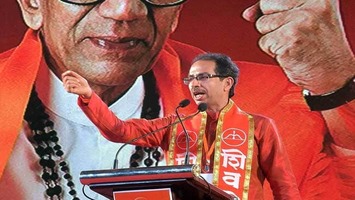
Shiv Sena chief Uddhav Thackeray held a meeting with a total of 56 party MLAs at his residence on Saturday. In this meeting, he clearly said that there will be a 50-50 formula between the two parties and under this, both will hold the post of Chief Minister for two-and-a-half years.

Along with this, Shiv Sena has also placed a condition of having equal number of ministers of both parties in the cabinet. It is being said that it is not easy for the BJP to accept these terms of the Shiv Sena. In such a situation, BJP can try to get support from Sharad Pawar's NCP.

BJP has got 17 seats less in the assembly elections in Maharashtra this time compared to 2014. The Shiv Sena also got seven seats less than the last time. 145 MLAs are needed to form the government while BJP has 105 and Shiv Sena has 56 MLAs.

There is no agreement regarding the post of Chief Minister

In Maharashtra, the problem of government formation is increasing. However, while the Shiv Sena has made it clear that now the talk will only be with the top leaders, the BJP has also given a clear indication that the Chief Minister's post will remain with him and he will not compromise on it in any way.

However, in the BJP government, Shiv Sena can get around forty percent ministerial post. It is hoped that this time the Shiv Sena will be given some important portfolios in the state cabinet.

The Shiv Sena wants to go ahead with the 50-50 formula for the chief minister's post while the BJP is not ready for it.

Dushyant Chautala's father was discharged from jail as soon as he supported BJP

Dushyant Chautala's father got two weeks' leave from jail as soon as he supported the BJP in Haryana. Is Dushyant Chautala's father Ajay Chautala's two-week leave from jail the result of a deal between the BJP and Jananayak Janata Party (JJP) to form a joint government in Haryana?

Significantly, the BJP has not got a majority in the Haryana Legislative Assembly elections. Therefore, the BJP formed the government in Haryana with the support of independent MLAs like Gopal Kanda and Dushyant Chautala of Jananayak Janata Party (JJP).

Manohar Lal Khattar was sworn in as the Chief Minister of Haryana for the second consecutive time. On the other hand, Janasayak Janata Party (JJP) leader Dushyant Chautala was sworn in as the Deputy Chief Minister of Haryana.

Meanwhile, Dushyant Chautala's father Ajay Chautala has been released from jail for two weeks.

The Haryana government has approved his two-week furlough.

Ajay Chautala is lodged in Tihar Jail after being convicted in the teacher recruitment scam.

Global Hunger Index: India Backward than Pakistan and Bangladesh

India has come at number 102 in the list of 117 countries in the Global Hunger Index. Being down in the Global Hunger Index means that people in India are not able to eat enough food, child mortality is high, children are not weight according to length and children are malnourished.

India is the third largest economy in Asia and the largest in South Asia but in the Global Hunger Index, India is also at the bottom of South Asia.

This means that the people of Pakistan, Bangladesh and Nepal are ahead of Indians in terms of nutrition. India is also the lowest among BRICS countries in this case. Pakistan is at number 94, Bangladesh at number 88, Nepal at number 73 and Sri Lanka at number 66.

India was ranked number 95 in 2010 and peaked at 102nd in 2019. India was ranked 83rd in the GHI rankings in the year 2000 in 113 countries and in 117 countries, India was ranked 102nd in 2019.

Belarus, Ukraine, Turkey, Cuba and Kuwait topped the GHI ranks. Even the GHI ranks of countries such as Rwanda and Ethiopia have improved. The ranking of the GHI index produces Ireland's ad agency Concern Worldwide and the German organization Welt Hunger.

Abhijeet said after Nobel, India's economy is in crisis

Michael Kramer has been awarded the Nobel Prize for Economics of 2019, along with Abhijit Banerjee of Indian origin and his wife Estair Dufalo.

Abhijeet Banerjee and his wife Duffalo are professors at the Massachusetts Institute of Technology in the United States.

At the MIT, Banerjee along with his wife was answering reporters' questions after the Nobel Honor was announced.

At the same time, when a journalist asked him questions about the Indian economy, he said that there is a very bad situation.

Banerjee said that people in India are cutting consumption due to scarcity and the way the decline is continuing, it seems that it cannot be controlled.

Banerjee and Dufalo are professors in the economics department of MIT. Both of them were married in 2015. Abhijeet Banerjee is also working on several research projects in India.

In response to a question on the Indian economy, Banerjee said, "I think the condition of the Indian economy is very bad." If we look at the data of NSS, then between 2014-15 and 2017-18, people of urban and rural India have cut their consumption drastically. This is the first time after years. This is the beginning of the crisis. ''

At the request of the journalist, Abhijeet Banerjee also answered questions in his native tongue Bangla. His wife Duflo is from France and Duflo also responded in French in addition to English.

Abhijeet Banerjee also spoke on the controversial change in data collection methods in India. Many people allege that the data that the Government of India shows of GDP growth and revenue deficit is not real data. Arvind Subramaniam, an economic advisor to the Modi government, has also made such allegations. Abhijeet Banerjee said that there are many doubts on the government's data.

Abhijeet Banerjee received the Nobel Prize for Economics

Indian-American economists Abhijeet Banerjee, Ishtar Duffalo and Michael Kramer have been jointly awarded the Nobel Prize in Economics this year.

All three have been awarded this honor for experimenting to overcome poverty around the world. It is believed that this approach was the most important contribution during the last two decades. Worldwide, the population of the poor is believed to be around 700 million.

On a study by Abhijeet Banerjee, the system of schooling of children with disabilities was improved in India, in which nearly 5 million children have benefited.

The three people also include Abhijeet Banerjee's partner Ishtar Duffalo, the youngest woman to win the Nobel in economics. She is just the second woman to win the Nobel in economics.

After the award was announced, Ishtar Duffalo said in the press conference, "Seeing that women can be successful, many women will be inspired and many men will be able to honor women."

Abhijeet Banerjee completed his MA from Jawaharlal Nehru University in 1983 after completing his BSc from Kolkata University in 1981. In 1988, he completed his PhD from Harvard University.

Prime Minister of India Narendra Modi has also congratulated him on the award of Nobel Prize to Abhijeet Banerjee. Modi has tweeted and said, "Abhijeet Banerjee has made a significant contribution in the field of poverty alleviation".

It is also being said about him that he had prepared the outline of Rahul Gandhi's justice plan. This has also been confirmed by Rahul Gandhi himself, he has tweeted that Abhijeet had prepared the justice plan which has the potential to destroy poverty and bring the Indian economy back on track.

Discussions have started on social media about his JNU connection.

Ramachandra Guha tweeted, "I am happy with the news of Abhijeet Banerjee and Ishtar Duffalo getting Nobel. They deserve it. Abhijeet is a proud graduate of a much maligned university. His work will impress many young Indian scholars. ''

West Bengal Chief Minister Mamata Banerjee has also congratulated Abhijeet Banerjee.