Special

Establishment of Israel in Palestine: Fall of Palestine, Rise of Israel

The conflict between Israel and Palestinian fighters has begun once more. The level of shelling that is being seen this time, it did not happen in the last several years.

Palestinian extremists have fired several hundred rockets from the Gaza Strip into the territory of Israel, and Israel has responded to this by its devastating airstrikes.

The target of rockets fired by Palestine is Israeli cities like Tel Aviv, Modine, Birsheba. Israel's missile defense system is responding to attacks by the Iron Dome Palestinian side. But the ringing of the sirens of danger has not stopped yet.

Israel has carried out airstrikes at several Gaza locations. There has been loss of life and property on both sides. Dozens of Palestinians have been killed, while on the other hand at least 10 Israelis have died.

This armed conflict has started after weeks of tension between Israeli police and Palestinian protesters in Jerusalem. Jerusalem is a place that is considered sacred to Jews and Muslims around the world.

The international community has appealed to both sides to maintain peace. In the Middle East, UN peace envoy Tor Vainsland has said that there is a danger of large-scale fighting there.

But the struggle of Israel and Palestinian people is years old and should be viewed from the same perspective. Why is the dispute between Israelis and Palestinians so complicated and why is the world divided about it? To understand this, we need to know the history of Israel and Palestine.

How did the conflict begin?

Jews were being targeted in Europe in the early twentieth century. Under these circumstances, the demand for a separate country for the Jewish people began to gain momentum. The region of Palestine, which lies between the Mediterranean Sea and the Jordan River, was considered sacred to all three Muslims, Jews and Christianity. Palestine was controlled by the Ottoman Empire and was largely held by the Arabs and other Muslim communities.

Amidst all this, a large number of Jews came to settle in Palestine and the people of Palestine started protesting against them.

After the First World War (1914–1918) the Ottoman Empire (the Kingdom of Osmania) disintegrated and Britain got the approval of the United Nations to take the administration of Palestine under its control.

But before the First World War and during the fighting, the British had made many promises to the Arabs and the Jewish people in Palestine, which they could not fulfill even a small part. Britain had already partitioned the Middle East with France. This led to tensions between the Arab people and Jews in Palestine and triggered violent clashes between armed groups on both sides.

After World War II (1939–1945) and the widespread massacre of Jews at the hands of Hitler and the Nazis in Germany, there was increasing pressure on the demand for a separate country for Jews. At that time it was planned that the territory under British control would be divided between the Palestinians and the Jews.

Finally, on 14 May 1948, with the help of Britain, Israel was forcibly established in Palestine. And Palestine was annihilated by the Jews. With the formation of Israel, a local tension turned into a territorial dispute. The very next day Egypt, Jordan, Syria and Iraq attacked this area. This was the first Arab-Israel conflict. It was also called the alleged freedom struggle of the Jews. After the end of this war, the United Nations secured half the land for an Arab state.

The period of tragedy started for the Palestinians from there itself. Seven and a half million Palestinians had to flee or take refuge in neighboring countries or were expelled and evicted by the Jewish armed forces.

But the year 1948 was not the last conflict between Jews and Arabs. In the year 1956, there was a dispute over the Suez Canal and Israel and Egypt again stood opposite each other. But this matter was resolved without war.

But the Arab-Israeli conflict lasted for six days in 1967 was the last major battle in a way. The war between 5 June 1967 and 10 June 1967 saw long-term effects on many levels.

Israel won the military alliance of the Arab countries. The Gaza Strip, Egypt's Sinai Peninsula, Jordan to the West Bank (including East Jerusalem) and the Golan Mountains from Syria came under the control of Israel. Five lakh Palestinians were displaced.

The last Arab-Israel conflict was the Yom Kippur War of 1973. Egypt and Syria fought this war against Israel. Egypt regained the Sinai Peninsula. In the year 1982, Israel gave up its claim on the Sinai Peninsula but not on Gaza. Six years later Egypt became the first Arab country to have a peace deal with Israel. Jordan followed suit.

Why was Israel established in the Middle East?

The Jews believe that this is the area where Israel is inhabited today, which God promised to give to Abraham and his descendants, their first ancestors.

In the past, this area was under attack from Assyrians (the tribal people living in present-day Iraq, Iran, Turkey and Syria), Babylon, Persia, Macedonia and Roman people. In the Roman Empire itself, this area was named Palestine, and seven decades after Christ, the Jewish people were evicted from this area.

With the rise of Islam, Palestine came under the control of the Arabs in the seventh century and was then conquered by the European invaders. In the year 1516, Palestine went under the control of the Ottoman Empire (Osmania Empire) and then after the First World War, on 29 September 1923, Britain occupied Palestine. Which lasted until May 15, 1948, the day after the founding of Israel on May 14, 1948.

To allow a smooth transition of power after 15 May 1948, Britain as a mandatory power was to hand over the UN Palestine Commission as the Provisional Government of Palestine.

On September 3, 1947, a United Nations Special Committee on Palestine submitted its report to the General Assembly. In this report, the committee accepted religious and historical arguments for the establishment of a Jewish nation in the Middle East.

In the Balfour Declaration of 1917, the British Government agreed to give Jews a 'national house' in Palestine. The Declaration recognized the historical connection of the Jewish people with Palestine and based on this, laid the foundation of the Jewish state in the territory of Palestine.

After the genocide of millions of Jews at the hands of the Nazis in Europe and during World War II, international pressure to recognize a separate Jewish nation began to increase.

Britain took up this issue for the consideration of the United Nations after failing to resolve the growing tension between the Arab people and the Jews.

On 29 November 1947, the United Nations General Assembly approved the plan for partition of Palestine. It recommended the formation of an Arab country and a Jewish state, as well as a special arrangement for Jerusalem.

This plan was accepted by the Jews but rejected by the Arab people. They saw it as losing their land. This was the reason why the United Nations plan could never be implemented.

The formation of independent Israel was announced on May 14, 1948, the day before Britain's control over Palestine came to an end. The next day, Israel applied for UN membership, and a year later it was approved. Among the member countries of the United Nations, 83 percent of the countries have recognized Israel. As of December 2019, 162 of 193 countries had recognized Israel.

Why are there two Palestinian territories?

The United Nations Special Committee on Palestine submitted a report to the General Assembly in 1947, recommending that the Western Galley (the mountainous region of Samaria and Judea) be included in the Arab nation.

The committee had recommended keeping the coastal plain of Ishud bordering Jerusalem and Egypt out of it.

But the division of this region was defined by the Armaistice line drawn in the year 1949. This line was drawn after the formation of Israel and the first Arab-Israeli War.

These two regions of Palestine are the West Bank (which includes East Jerusalem) and the Gaza Strip. These two areas are at a distance of 45 km from each other. The area of ​​the West Bank is 5970 square kilometers, while the area of ​​the Gaza Strip is 365 square kilometers.

The West Bank lies between Jerusalem and the eastern part of Jordan. Jerusalem is described by both the Palestinian side and Israel as its capital.

The Gaza Strip is a 41 km long area, whose width varies between 6 to 12 km.

Gaza has a 51-km border with Israel, seven kilometers with Egypt and 40 kilometers along the Mediterranean coast.

The Gaza Strip was taken over by Israel in the 1967 war. In 2005, Israel relinquished its hold on it. However, Israel controls the influx of people, goods and services from the Gaza Strip to air, land and sea in every way.

The Gaza Strip is currently a territory controlled by Hamas. Hamas is Israel's armed group that does not recognize Israel's pact with other factions of Palestine.

In contrast, the West Bank is ruled by the Palestinian National Authority. The Palestinian National Authority recognizes the international community as the government of the Palestinians.

Has there ever been an agreement between the Palestinians and the Israelis?

After the formation of Israel and the displacement of thousands of Palestinians, the Palestinian movement began to take root in refugee camps in the West Bank, Gaza, and Arab countries.

This movement had the support of Jordan and Egypt.

After the 1967 war, Palestinian organizations such as 'Fatah' led by Yasir Arafat formed the 'Palestinian Liberation Organization'.

The PLO initiated action against Israel, first from Jordan and then from Lebanon.

But these attacks targeted all targets within and outside Israel. There was no discrimination between Israel's embassies, players, its airplanes.

The Israeli targets were attacked for years by the Palestinians, and finally in 1993, the Oslo Peace Accord was signed by the PLO and Israel.

The Palestinian Liberation Organization promised to abandon the path of 'violence and extremism' and accepted Israel's right to live with peace and security. However, Hamas does not accept this agreement.

After this agreement, the Palestinian National Authority was formed and this organization got the right to represent the Palestinian people on international forums.

The president of this organization is elected by direct voting. The Chairman appoints a Prime Minister and his Cabinet. It has the authority to manage civic amenities in urban and rural areas.

East Jerusalem, historically considered the capital of the Palestinians, was not included in the Oslo peace settlement.

There is a deep dispute between the two sides regarding Jerusalem.

What are the main points of dispute between the Palestinians and the Israelis?

The delay in the formation of an independent Palestinian nation, the settlement of the ghettos in the West Bank and the security cordon surrounding the Palestinian territory are the reasons that hamper the peace process.

The International Court of Justice in The Hague has also criticized Israel's security cordon around the Palestinian territory.

In 2000, when the last serious effort was made to reconcile between the two sides in the presence of President Bill Clinton at Camp David in the US, it was clear that this is not the only obstacle in the path of peace between the Palestinians and the Israelis. .

At the time, Bill Clinton had failed to reach a compromise between Israeli Prime Minister Ehud Barak and Yasir Arafat. The issues on which there was disagreement between the two sides were the issue of Jerusalem, the border and land, the ghettos and Palestinian refugees.

Israel claims that Jerusalem is its territory. It says that since the capture of East Jerusalem in 1967, Jerusalem has been its capital, but it is not recognized internationally. The Palestinian side wants East Jerusalem to be its capital.

The Palestinians demand that the Arab-Israeli war that lasted six days, or the situation before June 4, 1967, determine its boundaries, which Israel refuses to accept.

Jewish settlements have been settled by Israel on occupied lands. They are illegal under international laws. More than half a million Jews live in these settlements in the West Bank and East Jerusalem.

The actual number of Palestinian refugees depends on who counts it. The PLO says that their number is more than one crore. Half of these people are registered with the United Nations. The Palestinians say that these refugees have the right to return to their land. But the land they are talking about is Israel today, and if that happens, what will happen to its identity as a Jewish nation.

Is Palestine a Country?

The United Nations recognizes Palestine as a 'non-member-observer state'.

The Palestinians have the right to participate in General Assembly meetings and debates to improve their chances of subscribing to UN organizations.

In 2011, Palestine applied for full membership but it did not happen.

More than 70% of the United Nations General Assembly members recognize Palestine as a state.

Why is America the main partner of Israel? Who has the support of Palestine?

For this, the importance of the pro-Israel vigorous lobby in America has to be understood. Public opinion in the US also supports Israel's stand.

Therefore, it is virtually impossible for a US president to withdraw support from Israel.

Apart from this, both countries are also military allies. Israel has received the most help from the United States. This help comes in the form of arms purchases and money.

However, in 2016, when the Security Council was voting on criticism of Israel's Jewish settlements policy, the Obama administration did not exercise its veto power.

But after the arrival of Donald Trump in the White House, the relationship between the two countries got new life. The US moved its embassy from Tel Aviv to Jerusalem. With this, America became the first country in the world to recognize Jerusalem as the capital of Israel.

In the last days of his term, President Trump was successful in normalizing Israel's relations with wealthy Arab countries.

However, since the Biden administration took power, Israel has adopted a strategy to distance itself from the risky conflict in Palestine. Experts say that the Biden administration sees this as a problem that requires huge political capital and what will be achieved is not sure.

US support to Israel continues, but the Biden administration's diplomacy appears to be a precaution. However, after the current violence, Biden may face criticism from his party's left wing, which have been critical of Israel.

On the other hand Turkey, Pakistan, China, India, Malaysia, Saudi Arabia, United Arab Emirates, Egypt, Syria, Iran and many Arab countries are with Palestinian people on the issue of Palestine. There is a feeling of sympathy for the Palestinians in Arab countries.

What is the way to peace and what needs to be done for it?

Experts say that for permanent peace, Israel should accept the sovereignty of the Palestinians, including Hamas. He should end the blockade with Gaza and also lift restrictions in the West Bank and East Jerusalem.

On the other hand, Palestinian factions have to abandon the path of violence for permanent peace and accept Israel.

Both sides have to reach an acceptable agreement on the issue of borders, Jewish settlements and the return of Palestinian refugees.

Economic cooperation plan between China and Iran will prove to be a 'game changer' in the global economic system

There is no official response from the United States so far on the $ 400 billion Comprehensive Economic Cooperation Plan for 25 years between China and Iran.

But analysts say that this step will prove to be an important 'game changer' not only for the region but in the global economic system.

There is uneasiness in Pakistan over the fact that now China is turning to Iran. But Pakistan's diplomats and analysts, who have a keen eye on the issue, have categorically dismissed this suspicion.

He says that the recent China and Iran Economic Cooperation Agreement will not be an alternative to the China Pakistan Economic Corridor (CPEC), but will strengthen it.

Iran's helplessness and China's need

According to experts, Tehran has tried to make itself a powerful country for the new global situation by collaborating with China on long-term economic, infrastructure construction and security issues.

But while doing so, on the one hand Iran may face new sanctions from the US, on the other hand this agreement can save it from the continuous sanctions of the US.

The long-standing US sanctions on Iran have brought it so close to China. This is why Iran has agreed to sell oil to China at a lower price than global rates. So that its oil sales can continue uninterrupted and the national treasury can get a reliable source of income.

Experts say that the documents of the agreement have not been revealed yet. But the information that has been received suggests that Iran's fragile economy can help bring economic stability to $ 400 billion projects over the next 25 years.

In return, China will be able to purchase oil, gas and petro-chemical products from Iran at a discounted rate. In addition, China will also invest in Iran's financial, transportation and telecommunications sectors.

Under this agreement, for the first time in Iran's history, the two countries will collaborate in state, security and military matters through joint training exercises, weapons modernization and joint intelligence.

According to the agreement reached between the two countries, five thousand soldiers of the People's Liberation Army of China will also be stationed in Iran. But keep in mind that there are also protests in Iran, in which former President of Iran Ahmadinejad is at the forefront.

It is also speculated that perhaps Iran may be an ideal candidate to adopt China's new digital currency, the E-RMB, which has weakened the power to ignore and approve the dollar.

Remember that Iran is not currently connected to the global financial and banking system SWIFT and is not dealing with Iran.

CPEC - Plus

According to Senator Mushahid Hussain Syed, President of the Pakistan-China Institute, the Iran-China strategic agreement is a good step for the region and also positive for Pakistan's interests, as it will strengthen regional economic cooperation, centered on Pakistan.

Mushahid Hussain hoped that it would help strengthen Gwadar Port's role in bringing stability to Balochistan and promoting regional cooperation with China, Afghanistan, Iran and Central Asian countries.

He further stated that it was unfortunate that India did not renew the IPI (Iran-Pakistan-India Pipeline) due to US pressure (when David Mulford was the US Ambassador to India on January 25, 2006). Instead opted for a nuclear deal with the US. India had removed the then minister Mani Shankar Aiyar who was a supporter of IPI.

Rejecting uneasiness about CPEC in Pakistan, Mushahid Hussain said that the Iran-China agreement would make CPEC more meaningful. Because both of these agreements are not for competition or rivalry, but both are aimed at strategic cooperation with China.

'Preparing to compete with world power'

Says India's famous defense analyst Praveen Sahni, "I think it would be wrong to see this agreement in the context of regional tensions in the Persian Gulf." China has always avoided supporting or opposing anyone in the Iran-Saudi rivalry. The main reason for China's increasing presence in the Persian Gulf is its economic affairs.''

He says that China and Saudi Arabia also signed major economic deals a year ago. But this new agreement of China with Iran reveals another important point. That is, instead of singlehanding Tehran, US sanctions have pushed it even further into China's camp. Therefore, the importance of this agreement is not only important for the region, but it also appears to be preparing to compete with the world power.

Says Praveen Sahni, "More details of the agreement are not currently available, so it cannot be compared to CPEC." Nevertheless, the major difference is that the basic interests of both the parties are connected. China needs oil, which it will get from Iran at cheaper rates.''

"In return, Iran wants to invest in its economic, oil production, infrastructure and trade, which China will provide," says Praveen Sahni. There is economic cooperation in China-Iran relations, which is not the case with China and Pakistan. What kind of role will this difference play, at the moment nothing can be said about it.''

According to him, "Iran has the resources that China desperately needs, that is, hydrocarbons." Pakistan has no such wealth. Therefore, in terms of economic matters, relations between Pakistan and China are very different from relations between China and Iran.''

According to Praveen Sahni, however, there has been much discussion on whether the corridor based on Pakistan, Iran, Central Asia will lead to economic development and improvement in the region.

Says Praveen Sahni, "It may be a long-term plan, but there is no possibility of its benefits in the short term. Iran and Pakistan do not manufacture industrial products that Central Asian countries import, nor do Pakistan and Iran are major markets for Central Asian exports.''

He said that there is such infrastructure from China to Central Asia as well as Europe, due to which there is a network of roads and railways. He says that "it is difficult to see how the new routes of China, Pakistan and Iran, will be able to be an alternative to these old paths".

Praveen further said that the project of building Chabahar port of Iran was initiated by India because India had to use Afghanistan's mineral resources and make them better by utilizing Iran's industrial capacity.

Clearly, given the ground situation in Afghanistan, it was like a 'distant drumming'. Afghanistan's economy is not large enough for India to build a major road or railway infrastructure for the India-Afghanistan trade corridor through Iran.

He further said that Pakistan has tried its best to stay away from Iran-Saudi confrontation in the Persian Gulf and so has India.

Says Praveen, "Both sides have economic interests in this confrontation, but at the same time, there are internal issues related to this confrontation. Therefore, it is becoming more and more difficult to maintain a balance between all the sides over time. Especially when the United States decides in the next few years that it needs to increase further pressure on Iran. I don't think there is any other option than to maintain a realistic balance.''

'America pushes Pakistan and Iran towards China'

Iqbal Ahmed Khan, former Pakistan ambassador and professor of diplomacy and international relations at Lahore University of Management Sciences, says China's investment plan with Iran is part of its $ 8 trillion BRI projects, one of which is CPEC.

According to former Ambassador Iqbal Ahmed Khan, it is not correct to compare China's investment in Iran to CPEC. Because both of these are Chinese investments and both will be helpful to each other and the three countries will benefit from it.

He says, "Both China and Iran are friends of Pakistan, so Pakistan wants the project to succeed."

Iqbal Ahmed Khan further said that China's investment in Iran is not at the cost of Pakistan, so it should not be considered "zero-sum game".

On the question whether Pakistan and China will be able to bear the burden of US sanctions on Iran. Iqbal Ahmed Khan said that the main reason for China's investment in Pakistan and Iran is, in fact, the sanctions imposed by the US or attempts to ignore these countries.

He says, "Both Pakistan and Iran have been sidelined by the US, due to which we had to look for another way. Pakistan decided to make the most of its political and geographical location. On one side is China and on the other side is Iran. However, if Pakistan is a friend of China, it does not mean that Pakistan is hostile to America, but China has asked Pakistan to improve its relations with both America and India many times. However, America should also realize this.

Iqbal Ahmed Khan said that Pakistan will gladly cooperate with Iran, but Pakistan will also try to make Iran like it a member of Shanghai Cooperation Council.

"China's cooperation with Iran will directly benefit Pakistan," he says. Oil from Iran, which currently reaches China after covering 13 thousand miles. He will reach China by a safe passage of 150 miles through Pakistan.''

He said that China's investments in Pakistan, Iran, Turkey and other Asian countries and its investment in economic and trade infrastructure, from the Atlantic Ocean to the regions of the Indian Ocean and the Pacific Ocean, are tangible signs of shifting the world's power.

Pakistan and Iran have an important role in this process of global change. There is also the role of US sanctions in this process of change, which is pushing these countries to the other side.''

'Iran Agreement and CPEC are natural partners'

Fatima Raza, a global affairs specialist at the Institute of Strategic Studies Islamabad, says that although the energy and infrastructure features in both projects are similar, the interests of the parties involved are different in many ways.

However, Fatima Raza said that the China-Iran agreement is a natural partnership agreement between the two countries, which could also further expand the prospects of CPEC.

Fatima Raza further said that for each party, comparing the two presents a different picture. "Both these projects provide an extraordinary opportunity for Pakistan to succeed, as it becomes a natural route for Iranian oil to reach China."

Fatima Raza said, "For China, it means a project like CPEC, which seeks to consolidate the impact of its expansion in the region, which will create trouble for US interests in the region."

Fatima Raza says the deal will help Iran meet its financial needs, which it desperately needs.

Fatima Raza said, "Both deals reinforce each other in their nature rather than being competitive, but its success depends on the parties utilizing their full potential."

'Impact on overall geo-political balance of Gulf and region'

Osama al-Sharif, an analyst at Arab News, wrote that the 25-year comprehensive strategic partnership agreement between China and Iran would have a long-term impact on the overall geopolitical-political balance of the Gulf and region.

The agreement has been signed at a time when relations between Beijing and Washington are very tense.

The deal gave Tehran a strong position on Iran's nuclear deal with the West, renegotiation and efforts to expand it.

According to Osama al-Sharif, the agreement would provide China with the opportunity to deploy 5 thousand security and military personnel on Iranian soil, which would prove to be a regional game changer.

Prior to China, Tehran signed a 10-year cooperation agreement with Moscow in 2001, particularly in the nuclear sector, which has since been extended twice.

He wrote that two years ago I joined a naval exercise with Iran, Russia and China. This new agreement will allow China to set up bases in the Gulf region as well as in Central Asia.

In return, Iran will get China's technology and invest in its poor infrastructure.

The Chinese government has been strengthening its economic ties with other Gulf countries for years.

Beijing has signed cooperation agreements with the United Arab Emirates and Kuwait and has good relations with Saudi Arabia.

Osama al-Sharif wrote, "The new agreement will increase the sense of danger in the capitals of the Arab countries of the Gulf." Because these countries see Iran as a major source of instability and its alliance with Beijing will further strengthen the line between Tehran and Qom.''

Also, according to Osama al-Sharif, Israel will also feel uneasy about China's move. Both Russia and China, who signed Iran's nuclear deal, supported Tehran's side and openly violated US sanctions.

Tension between USA and China increased

Alex Lantier, an analyst with the World Socialist Organization, writes that the terms of the Iran-China agreement have not been disclosed. But these signatures came at a time when the US refused to lift the restrictions imposed by former President Donald Trump. At the same time, the differences between China and the United States came to the fore in the conference to be held in Alaska of China and America.

Speaking to the press before the summit began, US Secretary of State Anthony Blinken said that China should accept Washington's "international order based on the rule" or else it would "have a more rigid and unstable world." Will have to face it.''

In Tehran, Chinese Foreign Minister Wang Yi said in response to a question that "relations between our two countries have now reached a strategic level and China is trying to promote wider relations with the Islamic Republic of Iran.''

The signing of the roadmap for strategic cooperation between the two countries shows that Beijing will enhance relations to the highest level.

China resistance

According to the Chinese government news agency Global Times, the Chinese foreign minister told Iranian officials that "China will dominate domination and opposition to hooliganism, along with protecting international justice, as well as international norms with the people of Iran and other countries."

The agreement was first discussed in 2016 between Iran's Supreme Leader Syed Ali Khamenei and Chinese President Xi Jinping.

To deepen economic ties with the Middle East, China also offered Iran to cooperate in development with its BRI program.

The Tehran Times quoted Iran's Ambassador to China Mohammad Keshavarz Zadeh as saying that the agreement "clarifies the potential for cooperation between Iran and China, particularly in the fields of technology, industry, transportation and energy." The firms have built mass transit systems, railways and other important infrastructure in Iran.

In December 2020, amid speculation about the signing of the deal, Peter Berkowitz, director of the policy planning staff of the US State Department, condemned it.

He told the newspaper Al Arabia that if this agreement was reached, it would be bad news for the "free world". Iran sows the seeds of terrorism, death and destruction throughout the region. Empowering this country of the People's Republic of China will further increase the risk.

How was the ship stuck in the Suez Canal finally evacuated?

The jam has opened in Egypt's Suez Canal. After a lot of effort, the huge ship stuck there for a week could be removed from the path.

With the help of tug boats and dredgers, the 400-meter (1,300 ft) long 'Ever Given' ship was evacuated.

Hundreds of ships are waiting to pass through this canal connecting the Mediterranean Sea to the Red Sea.

It is one of the busiest trade routes in the world.

Peter Berbersky, CEO of Boskalis, the company that helped remove the ship, said, "The Ever Given re-floated on Monday, March 29, 2021 at 15:05 local time. After which it was possible to reopen the route to the Suez Canal.''

Egyptian officials say it will take up to three days for all ships stranded due to the jam, but experts believe the impact on global shipping may take weeks or even months.

How was the ship finally evacuated?

On the morning of Tuesday, March 23, 2021, it was a difficult challenge for the rescue teams to evacuate the two-million-tonne vessel stuck amidst strong winds and sand storm.

The SMIT, an expert team in the evacuation of such vessels, arranged for 13 tug boats. Tug boats are small but powerful boats that can pull large ships from one place to another.

Dredgers were also called. Who dug out 30,000 cubic meters of mud and sand from under the ends of the ship.

When this did not happen, it was also thought that some cargo would have to be unloaded to lighten the ship. It was feared that some 18,000 containers may have to be removed.

But the high waves helped the tug boat and the dredger in their work, and on the morning of Monday, March 29, 2021, the stern (the ship's rear) was evacuated, then the massive ship stuck diagonally could be straightened to a great extent. A few hours later, Bo (the front of the ship) also escaped and the Ever Given was in a floating position, that is, it was completely evacuated.

The ship was then pulled to Great Bitter Lake, which lies between the two halves of the canal on the north side of the shipwreck. Safety check of the ship will be carried out here.

What happened next?

A Marine source told Reuters on Monday, March 29, 2021
In the evening, the ships were heading south towards the Red Sea, while the leath agencies that served the canal said that the ships had started to come out of the Great Bitter Lake.

Some ships have already left the area. They decided to take an alternative, longer route around the southern tip of Africa.

These cargoes will definitely take more time to reach. When they arrive at the port, they may also get jammed there. The schedule of the ships coming in the next few days may also be disturbed.

According to a report by BBC Business Correspondent Theo Leggat, this may increase the cost of shipping goods to Europe.

Shipping group Marsk said, "Clearly, it will be investigated, because it has made a big impact and I think there will be some debate over what exactly happened there."

Mursk said, "What can we do so that it will never happen again?" It will be necessary for the Egyptian administration to see that the ships are always going out of the canal without any problem, because it is in their own interest.''

Great success

BBC Arabic correspondent Sally Nabil present at the port of Suez

The eviction of the Ever Given ship is considered a big success. Some experts have previously warned that it may take weeks to get the ship out. But high waves as well as specialist equipment helped in the rescue operation.

Now the administration has to deal with another challenge - jam. The head of the Suez Canal Authority said that they would be allowed to leave the first of the hundreds of ships stuck in the jam that would come first. However, some ships may be given priority due to cargo loaded on the ship.

The impact on global trade put the administration under tremendous pressure on the jam. For Egypt, this canal is not just a question of national pride, but it also strengthens the economy.

A few days ago I asked Osama Rabi, the head of the Suez Canal Authority, whether he was worried that some shipping companies would avoid sending such large ships through the canal in the future. In response to this, he said that there is no alternative to the Suez Canal, according to him that this route reaches it quickly and is safe. So here it is not only about time, but also about security.

What will happen to the ship now?

According to the managers of the ship's technical maintenance company, the ship will now undergo a thorough investigation in Great Bitter Lake.

Managers said that no pollution or cargo damage has been detected and preliminary investigations have revealed that there was no mechanical or engine failure behind the shipwreck.

It is reported that all 25 crew members of the Indian crew on board are safe. "Their hard work and tireless professionalism are being praised," say the managers.

There are many types of things in the ship, and it is believed that this item is worth billions of dollars.

Indonesia: Fierce fire in a Java refinery

A horrific fire broke out on Monday, March 29, 2021 at the Balonagan Refinery, one of Indonesia's largest oil refineries. Relief and rescue teams have to work hard to control the fire. This refinery in West Java province is owned by the state-run oil company, Pertemina.

According to local time the fire erupted around midnight around 12:45. The cause of the fire has not been known yet.

According to media reports, at least five people were injured in this fire. As a precaution, around 950 people have been evacuated from their homes and sent to safe places. Although some people are said to be missing.

TV footage and video posted on social media has also seen flames and smoke swings rising above the refinery on the morning of Monday, March 29, 2021.

News agency Reuters quoted a local media organization Metro TV as referring to a person. The man said, "We first felt a strong smell of oil like tearing the nose." After that we heard the sound of flames.''

According to the Regional Disaster Management Agency, five people have been hospitalized for treatment after being seriously injured and 15 with minor burns.

Catastrophic accident

BBC News Indonesia correspondent Jeromei Veeravan said, "The Balonagan Refinery is one of Indonesia's largest refineries. Its importance is because it supplies fuel and petrochemicals to the Greater Jakarta region.''

According to him, the question of how much this firefight will affect the factories along with the plastics and chemical business is arising. However, refinery owner Pertemina has told the people that the oil supply system is unaffected and it continues as before.

On the other hand, many people are asking how can such a disastrous event happen in a government refinery?

Kurtubi, a politician and a member of the Energy Affairs Commission of the House of Representatives, said in a TV interview that the Balonagan refinery operating since 1994 is relatively new compared to the other refineries at Partemina. He has demanded that the distance from the residential areas of all the oil refineries of the country be ascertained.

According to Jerome Veeravan, there is a demand for an in-depth investigation into the incident on social media. One person has asked, "Was there a tampering in the refinery or was it an accident?" Others are asking whether the standard operating procedure (SOP) was followed in the refinery. At the same time someone wrote, "The person who has a role in this case should be taken to court."

A BBC correspondent has reported that people living near the refinery, following safety standards during the Corona era, have been evacuated from their homes and sent to different camps as a precautionary measure.

Veeravan quoted Pertemina as saying that the cause of the fire has not been ascertained but the incident occurred during heavy rains and lightning.

No effect on oil supply

At a press conference on Monday, March 29, 2021, the company stated that the fire had not damaged the refinery's processing capabilities, so operations could return to normal within the next five days.

Reuters was quoted by Pertemina CEO Nikki Vidyavati as saying that the fire was on refinery tanks. This has not caused any damage to the processing plant. The company said that it is closing its refinery and the flow of oil is being controlled to prevent this fire from spreading further.

The Balonagan Refinery is 225 kilometers east of Indonesia's capital, Jakarta. Located in 340 hectares, the refinery has a processing capacity of 1,25,000 barrels per day.

Suez Canal: Stranded ship removed from shore

According to officials, the container ship stranded in the Suez Canal has been removed from shore. The ship was stranded in the Suez Canal from 23 March 2021.

According to the Suez Canal Authority, the direction of the 400 meter long 'Ever Given' ship has been corrected by 80%.

Accordingly, the work of removing the boat will be resumed from Monday.

The 'Ever Given' disrupted one of the world's busiest trade routes, causing the rest of the ship to return and lead to lengthy traffic.

After this success in the rescue of the stranded ship, hope is raised that the jam on the canal may open in a few hours. Nearly $ 9.6 billion worth of goods originates from this waterway every day.

According to the news agency Reuters, tugboats have been used to remove the ship.

According to the Suez Canal Authority, the ship's rear, which was previously four meters from the coast, is now 102 meters. The authority said that efforts have now begun to make the ship in a fully floatable condition.

According to officials, the work of removing the ship will start at 11:30 pm local time after the waves arise.

When the ship is removed, 367 ships waiting there will find their way. Suez Canal Authority (SCA) chairman Osama Rabi told Egypt's Extra News on Sunday, 28 March 2021, that they included a number of cargo ships, oil tankers and ships carrying ANG or LPG gas.

The 400-meter-long Avar Given ship was caught diagonally in the Suez Canal on Tuesday, 23 March 2021 amid strong winds. Because of this, there was a situation of traffic jams on this shortest ship route between Europe and Asia.

After failing for several days to evacuate the ship, on Sunday, March 28, 2021, the Canal Administration began preparations to remove about 20,000 containers from the ship to reduce the weight.

Container ship stranded in Suez Canal evacuated: report

There are reports that a cargo vessel stranded in the Suez Canal has been evacuated.

The video posted on social media on Monday, March 29, 2021 can be seen that the passage of the canal is open due to the rear end of the Ever Given ship.

At the same time, news agency Reuters has written that according to InchCap Shipping Services, this huge ship stuck in the Suez Canal for about a week has now started to float again and work is going on to make it in a running condition.

Inchcap, which provides global maritime services, said on Twitter, "The ship started to float again at 4.30 am local time and is now in full operation.

The ship-tracking service vessel finder has changed the status of the ship on its website and has now written that the ship is on the way.

The 400-meter-long Avar Given ship was caught diagonally in the Suez Canal on Tuesday, 23 March 2021 amid strong winds. Because of this, there was a situation of traffic jams on this shortest ship route between Europe and Asia.

At least 369 ships were waiting for the canal to open. Suez Canal Authority (SCA) chairman Osama Rabi told Egyptian Extra News on Sunday, 28 March 2021, that there were several cargo ships, oil tankers and ships carrying ANG or LPG gas.

Egyptian Lath Agencies, which provide transit services in Suez, tweeted that the ship has been partially re-floated, pending official confirmation from the Suez Canal Authority.

At the same time, according to Reuters, the price of crude oil has come down after the news of the ship started to float again.

The Suez Canal Authority had earlier said in one of its statements that the work of towing the ship has been resumed. On Sunday, 28 March 2021, teams trying to evacuate had speeded up their work.

After a long effort through tugboats and dredgers, a great success has been achieved in getting the ship out.

After failing to evacuate the ship for several days, on Sunday, March 28, 2021, the Canal Administration began preparations to remove about 20,000 containers from the ship to lose weight.

Experts had previously told the BBC that special equipment had to be used in such operations, such as a crane that would have to reach up to 60 meters (200 ft), which could take weeks.

How will the closure of the Suez Canal affect the world economy?

The Suez Canal, known as the backbone of world trade, is one of the main sea crossings in the world. This makes up 12% of the world's total merchandise.

In such a situation, after the cargo ship going from China to the Netherlands got stuck on the morning of Tuesday, 23 March 2021, it is expected to have a serious impact on the business of the world.

This cargo ship has blocked the way for the rest of the ships.

Niels Madsen, vice president of products and operations at Denmark's consultancy firm C-Intelligence, predicts that if this ship is stuck for 48 hours, the already serious condition will slowly deteriorate.

He told the news agency Reuters that if this happens for three to five days, then it will start to have a very bad effect on world trade. The most common is the possibility of inflation rising due to the halt of movement of goods.

Why is the Suez Canal so important?

1) An important link to unite east and west

The Suez Canal is a 193 km long canal located in Egypt that connects the Mediterranean Sea to the Red Sea. It is the shortest sea link between Asia and Europe. This waterway crosses the Svez isthmus (Strait) in Egypt. This canal consists of three natural lakes.

The importance of this canal, active since 1869, is that ships to the eastern and western parts of the world first used to sail on the southern tip of Africa via the Cape of Good Hope. But after the construction of this waterway, ships began to sail through this part of West Asia to Europe and Asia.

According to the World Maritime Transport Council, the ship connecting Asia and Europe has to cover a distance of nine thousand kilometers after the construction of this canal. This is 43 percent of the total distance.

2) daily value of 9.5 billion

According to consultancy firm Lloyds List, on Wednesday, 24 March 2021, 40 cargo ships and 24 tankers were stranded waiting to cross the canal.

Dry products such as grain, cement are loaded on these vessels. At the same time, petroleum products are filled in tankers.

Eight ships carrying livestock and water tankers are also stranded, according to the news agency Bloomberg.

Given the condition of the Suez Canal and its importance, it is called one of the few 'choke points' of the earth. Therefore, the US Energy Agency considers the Suez Canal to be essential for global energy security and the supply of all types of goods.

According to an estimate, about 19 thousand vessels from the Suez Canal carry 120 million tonnes of cargo every year. The Lloyds List believes that $ 9.5 billion worth of freight ships pass through this canal every day. Of these, about $ 5 billion goes to the west and $ 4.5 billion goes to the east.

3) Very important for supply chain

Experts say that this channel is very important for the supply of goods in the world. So its blocking can have serious consequences.

C Intelligence analyst Lars Jensen says the first problem may be in port congestion.

He said, "If we assume that all the ships are full. So in terms of 55 thousand TEUs (capacity measuring unit of container), within two days, a total of 110 thousand TEUs of goods going from Asia to Europe will be trapped. And as soon as the jam is over, all these ships will arrive at the European ports simultaneously, so that the load there will also reach the peak. ''

Jensen estimates that within a week we will have to see tremendous pressure on European ports. In his opinion, due to this problem, the supply and price of every goods sold in the shops is feared to be affected.

4) Risk of rising inflation

Salvatore Mercogliano, a marine affairs expert and history professor at Campbell University in North Carolina in the US, believes that the problem could have serious repercussions on world trade.

In a conversation with the BBC, he said, "With the closure of the canal, cargo ships and oil tankers are unable to deliver food, fuel and finished goods to Europe." Due to this, no goods are being sent from Europe to the far east.''

BBC economic correspondent Theo Legatt said, "The Suez Canal is critical to the transportation of petroleum and liquid natural gas, as fuel is transported from the Middle East to Europe."

Lloyds List Intelligence reported that 5,163 tankers had passed through the canal last year. Due to this, about two million barrels of oil were transported every day.

According to the US EIA, the Suez Canal and the Sumed Pipeline (from Alexandria in the Mediterranean Sea to the Suez Bay) carry nine percent of the total oil traded by the sea and eight percent of the liquid natural gas.

Given the importance of the canal and the current problem, on Wednesday, March 24, 2021, oil prices increased by more than six percent. However, it declined on Thursday, 25 March 2021.

ING Bank believes that if this blockage is prolonged, it is more likely that buyers will have to turn to the cash market to secure oil supplies from elsewhere.

The containers must also decide whether to wait for it to be emptied or go through the 'Cape of Good Hope'. According to ING Bank, freight will be delayed if either of the two options are chosen.

In the opinion of experts, the real effect of the existing problem will be revealed only with time.

"The problem will probably be weak and short-lived," Bionar Tonhaugen of the Ristad cabinet told news agency AFP. But if this obstruction continues for a long time, then it will increase inflation. This effect will last for a long time.''

Effect on other goods

"There are millions of dollars worth of goods on other ships," Ian Woods, a London-based lawyer for Clyde & Co's maritime affairs, told NBC. If the canal is not normalized quickly, the ships will go by other routes. This means more time and more cost. And this will ultimately be recovered from the consumers only.''

Leggett, a BBC expert, said it was a nightmare.

He said, "This has shown what can go wrong when new generation big ships like the Ever Given pass through the narrow canal."

However, parts of the canal were widened in 2015 as part of the modernization plan. Yet it is very difficult to navigate. Not only this, more serious accidents are expected in the future.

Law will be made for regulation of social media, OTT, digital platforms

The Modi government at the Center in India will bring a new law to regulate social media and digital content in the next three months. Law Minister of India Ravi Shankar Prasad and Communications Minister of India Prakash Javadekar announced this at a press conference in Delhi.

Ravi Shankar Prasad said, "Social media is doing business in India, they have done good business and strengthened the Indian people. But at the same time there have been complaints of irresponsible use of social media for the last several days.

According to the Modi government, over the past few years, there have been many complaints on social media like promoting violence, sharing obscene content, using other country's posts, the government has brought new guidelines to deal with it and in three months it A law will be made for this.

What are the guidelines?

Explaining the guidelines, Ravi Shankar Prasad said, "Social media is divided into 2 categories, one intermediary and the other signifcant social media intermediary. We will soon issue a notification of the user number for this. ''

"If a complaint is made about the dignity of the users, especially the dignity of women, then the content has to be removed within 24 hours of making the complaint."

He said that the law of significant social media will be implemented in three months.

Apart from this, social media companies will have to make a grievance redressal mechanism and also make the name of the officer handling the complaints public. This officer will register the complaint in 24 hours and resolve it in 15 days.

He said that Significant Social Media will have to appoint Chief Compliance Officer, Nodal Content Person and a Resident Grievance Officer, all of which will be in India. Apart from this, they will also have to issue a report related to the disposal of complaints every month.

Account verification will be necessary

Modi government said, furthermore, to ensure that fake accounts are not created on social media, companies will be required to make the verification process mandatory.

Who has made a post on the social media platform, the company has to give this information on the court's order or the government's asking.

Ravi Shankar Prasad said, "On asking any court or government, they have to tell who started a post. If started from outside India then who started in India. This should be in relation to India's sovereignty, national security, relations with foreign states, rape etc. ''

However, social media companies have often argued that in order to provide such information, they have to break the end to end encryption and save the user's data, which would violate their privacy. End to end encryption means that no third (even company) can hear or read the conversation between two people.

In response to a question related to how the company can provide this information, Ravi Shankar Prasad said, "We are not asking to break encryption, we are just asking who started it."

He cited some guidelines of the Supreme Court that these steps are necessary to prevent the spread of pornographic material, rape, gang rape videos. Apart from this, he said that many news reports of social media posts have also come out from outside the country.

Ravi Shankar Prasad said that the purpose of all these rules is to give more power in the hands of the people. Talking in detail on this, he said, "If a significant post is removed, the company will have to give a reason for it."

He said that all these things will be asked by the platforms to create a mechanism.

Ravi Shankar Prasad also gave users data on different social media platforms. According to him, there are 53 crores of WhatsApp in India, 44.8 crores of YouTube, 41 crores of Facebook, 21 crores of Instagram, 1.75 crores of Twitter users.

Also rules for OTT and digital platforms

Modi government will also bring legislation to regulate OTT platform.

India's Union Minister for Information and Broadcasting Prakash Javadekar said, "There will be a three-tier mechanism for the OTT platform. OTT platforms and digital media will have to provide information about themselves, and they will have to create a grievance redressal mechanism.

According to Javadekar, the government had earlier met OTT companies and asked them to create a self-regulation but they could not do so.

OTT and digital news platforms will have to provide their details as they work from where the new rules come. Apart from this, a portal will have to be created for redressal of grievances.

Javadekar said that like TV and print, a regulatory body will be created for digital, which can be headed by a retired judge or eminent person.

He said, "Just as an apology is made on TV for making a mistake, the same has to be done for digital."

Apart from this, the content will have to be classified according to age and will have to provide parental lock.

He said that where immediate action is required, a monitoring mechanism will be created at the government level for such cases.

Hathras gang rape: CBI admits to gang rape and murder of Dalit girl, chargesheet filed

The CBI has filed a charge sheet on 18 December 2020 in the gang rape and murder case of a Dalit girl in Hathras, Uttar Pradesh, India.

The CBI officials have also imposed sections of gangrape and murder on the four accused, Sandeep, Lavkush, Ravi and Ramu, for the crime committed with a 19-year-old Dalit girl.

According to the news agency PTI, the counsel for the accused told that the local court of Hathras has taken cognizance of the case.

The CBI was investigating the case under the supervision of the Allahabad High Court and CBI officials probed the role of accused Sandeep, Lavkush, Ravi and Ramu in the entire case.

The four accused are currently in judicial custody. CBI officials said the four were also subjected to separate tests at the Forensic Science Laboratory in Gandhinagar, Gujarat.

Apart from this, the CBI investigation team also talked to the doctors of Jawaharlal Nehru Medical College. This is the same hospital where the deceased was treated.

The Hathras gang rape case came up for discussion not only because of the barbarity of the criminals, but also in the Uttar Pradesh police, without the permission of the family of the deceased and there was a dispute over the funeral of the girl in his absence.

In addition to the Uttar Pradesh police, the Yogi government of Uttar Pradesh was also severely criticized in this case.

Later, the Uttar Pradesh government had told the court that the girl was cremated in a hurry due to fear of deteriorating the situation of justice in the area.

The 19-year-old girl belonged to a Dalit family while the four accused belong to the upper caste.

In this whole case, the confusion of caste-system prevailing in Uttar Pradesh was also revealed when Mahapanchayat was called in some villages in favor of the accused.

Not only this, questions were also raised about the girl being gang raped. In addition, the Uttar Pradesh government had for some time banned the media's entry into the victim's village.

In this case, the Uttar Pradesh government had talked about getting narco test of the family of the victim, which was also disputed because the narco test is usually from the accused party.

A Special Investigation Committee (SIT) was finally formed after allegations of lewd attitude on the Uttar Pradesh government and administration. However, the investigation was later handed over to the CBI.

Turkey-Israel Relations: Are Turkey and Israel Coming Close Again?

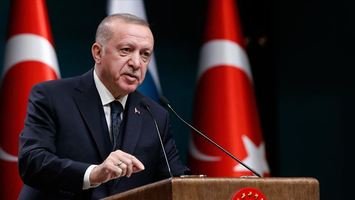
The government of Turkish President Richap Tayyip Ardoan, who has made a strong commentary on Israel at the international level and talked about the rights of the Palestinians, has announced a sudden resumption of diplomatic relations with Israel, which has almost ended two years.

Turkey appointed its ambassador to Israel on 15 December 2020. In 2018, Turkey withdrew its ambassador from Tel Aviv in protest against Israel's violent actions against Palestinian protesters in Gaza.

These demonstrations were against US President Donald Trump's decision to send the US Embassy from Tel Aviv to Jerusalem.

Turkish leader Ardoan has called Israel a 'murderer and murderer of children', but now he is sending his ambassador to Israel. To understand the meaning of this decision, it is necessary to understand the recent developments and the long historical relationship between Israel and Turkey.

Turkey's decision to deploy its ambassador came on 15 December 2020 when on 14 December 2020, the US imposed trade sanctions on Turkey.

After purchasing the S-400 missile defense system from Russia, the US halted several plans, including selling its F-35 fighter aircraft to Turkey in early 2020, and Turkey's aviator training program.

Despite US pressure, Turkey refused to back down the purchase of the Russian missile system. Now on the go, the Trump administration has imposed new restrictions on Turkey.

It is worth noting that Turkey is also an important member of NATO, the defense alliance of America and Europe.

New factionalism and 'geo-strategic' changes are taking place in the Middle East at a time when the entire world is historically battling the Corona virus epidemic.

Economic difficulties are increasing in countries all over the world and Arab countries have a difficult time as their dependence on oil has decreased due to which their economic burden has increased.

Arab countries are discovering their new economic prospects by reviewing their traditional policies due to economic stability.

At the same time, political change is also coming in America and the administration of the new President Joe Biden is going to take over from 20 January 2021.

Fluctuations in Turkey and Israel relations

Palestine has always remained a focal point in relations between Turkey and Israel. Three times in the past, Turkey has tried to bring down or end its diplomatic relations with Israel and each time Palestine has been at its center.

Turkey first cut its diplomatic ties in 1956, when Israel was attacked in the Sinai Desert after the support of Britain and France on the Suez Canal issue.

This was followed by a secret meeting between the then Israeli Prime Minister David Ben Gorian and Turkish Chief Adnan Menderes in 1958 and the two countries agreed to establish defense and intelligence cooperation.

When Israel captured East Jerusalem in 1980, Turkey again reduced its diplomatic relations with it. During this period diplomatic relations between the two countries remained cold but relations between the two countries were restored after the Oslo peace deal in the 90s.

During this time, the relationship between the two countries, which was also called the 'marriage of coercion', continued without any confusion and during this time there were many agreements of cooperation in mutual trade and defense.

In January 2000, Israel entered into an agreement to buy water from Turkey, but the agreement did not last long. This was followed by several defense agreements between the two countries, including giving drones and surveillance equipment to Turkey.

The main reason for the formation of relations in the defense sector - Turkey's defense needs and finding buyers to sell their goods to Israel.

In Turkey in November 2002, relations between the two countries began a new turning point when Rechap Tayyip Ardoan's right-wing Justice and Development Party (AKP) came to power. In 2005, Ardoan also visited Israel and offered a visit to Turkey to then Israeli Prime Minister Ehud Olmert.

The situation took another turn in December 2008, and three days after Israeli Prime Minister Shimon Perez visited Ankara, Israel started climbing in Gaza under the name 'Operation Cast Led'.

Ardoan, who had sympathy with Hamas, was severely shocked by this action by Israel and called it 'clearly deceived'.

In 2010, the Mavi Marmara incident occurred during the siege of the Israeli army in Gaza. Mavi Marmara was carrying humanitarian aid from a Turkish human rights organization, which was attacked by the Israeli army. 10 Ottoman civilians were killed in this incident.

After this incident, the relationship between the two countries ended.

American try

The US continued efforts to reduce tensions and restore diplomatic relations between its two friendly countries in the region.

For this, Ardoan put forward three conditions, including conditions such as apologizing for the attack on Mavi Marmara, compensation for the casualties and ending the siege of Gaza.

The biggest condition for Israel was to apologize, and Israel was also demanding Turkey to expel some Hamas leaders from the country.

As part of US efforts, in 2013, then President Barack Obama held a phone conversation between Ardoan and Israeli Prime Minister Binyamin Netanyahu. During a telephone conversation, Netanyahu agreed to apologize and pay compensation for the casualties.

Despite this, frequent incidents in the region led to a delay in normalizing relations between the two countries and finally in 2016, diplomatic relations could be restored between the two countries.