World

24 Christians Shot Dead in Egypt's Capital Cairo

Unidentified gunmen have slaughtered the Egyptian capital Cairo. The attackers rushed indiscriminately on the bus carrying the Christians, standing ready in the garb of the military. In this attack, 24 people have died and 25 have been injured.

According to Fax News, eight to ten raiders fired on the bus passing through South Cairo. For the past few days in the Muslim dominated country of Egypt, Christian community has become easy prey of fundamentalists.

No group has taken responsibility for this attack so far. But Egypt's Coptic Christian is the target of the terrorist organization Islamic group. Security personnel are searching of attackers. Ambulances reached the spot to bring the injured to the hospital.

On Wednesday (May 24th), the US Embassy in Cairo also issued a warning and said that according to the information of the embassy, a terrorist organization called Hasam group threatened the attack.

Egyptian Health Ministry spokesman Khalid Mujahid said that 24 Christians died in the attack and 27 others were injured.

According to the report, these attacks took place 160 miles from Cairo, on the banks of the Nile river, in place of Minya. The highest population of Coptic Christians are in Mina of Egypt. Religious tension has increased in this place over the past few years.

At least 46 people died in two suicidal attacks targeting the church in Tanta and Alexandria on April 9 last month.

Pakistan Denies Indian Action in Naushera

Indian Army on Tuesday made a press conference claiming that Pakistan's checkpoints have been damaged recently in the action taken in the Naushera sector of Jammu and Kashmir.

Although Pakistan has denied any such action by India.

Major General Asif Ghafoor, an official of SPR, tweeted, "India's claims of destroying Pakistani posts on the LoC and firing Pakistani Army on civilians are wrong."

Earlier, Major General Ashok Narula of the Indian Army said at the press conference that the action was taken by the Indian Army in response to Pakistan's action on June 20 and 21 in the Naushera sector.

He said that now the melting of snow in the summer is likely to increase infiltration, but the preparation of the Indian Army is complete.

Four extremists were killed in action in Naushera.

He also said that our effort is to restore peace in Jammu and Kashmir. It is important that the intrusion on the Line of Control be effectively prevented.

On this occasion, the Indian Army has released a video. About 21 seconds of this video shows 10-11 blasts.

Indian Army spokesman Major General Ashok Narula said that India's position on the Line of Control is stronger than Pakistan. The Pakistani army helps the armed infiltrators to enter in Kashmir of India.

On this video released by the Indian Army, Pakistani High Commissioner Abdul Basit told the news channel "CNN News 18" in New Delhi that he has not received information about it from Pakistan, so he can not say anything at the moment.

However, he said, "Two things prove this. First, that the Jammu and Kashmir is a central issue between the two countries and second, if something happens today, then it is necessary to understand that the need for both the countries to sit on the negotiating table to resolve this long pending issue. It is unfortunate that despite the ceasefire, there is a tension on the Line of Control, so it is important that such things should not happen."

In Jammu and Kashmir's Poonch, two soldiers of Indian Army were killed recently and they were vandalized with their dead bodies.

The Indian army had said at that time that it would be answered fairly.

India's Home Minister Rajnath Singh and Defense Minister Arun Jaitley had condemned to vandalize the body of the soldiers and said that there were no such acts during the war.

Although Pakistan had denied it by hand in such an incident.

Manchester Blast: IS Took responsibility for Assault

The terrorist organisation IS (Islamic State) took responsibility of the blast in Manchester of UK. This information is given by the news agency AFP.

At the night of Monday (May 22nd) in Manchester, 22 people died and about 50 others were injured.

At the time of the attack, American pop singer Arianna Grande was in the program at Manchester Arena. She also expressed grief at the attack.

The 23-year-old singer Ariana Grande tweeted after the incident, "I've been broken. I deeply apologize to the depths of my heart. I do not have the word."

Even before the name of IS in the attack, its supporters were celebrating on the Internet. After the attack the supporters of IS expressed happiness and sent congratulatory messages among themselves.

According to Reuters reports, congratulatory messages were sent using the hashtag from the Twitter account linked to the Islamic State and encouraged for similar attacks in other places.

Indian President Pranab Mukherjee and Indian Prime Minister Narendra Modi also expressed condolences over the victims of the Manchester blasts and expressed condolences to the families of the victims. President Mukherjee said that India is with Britain in this hour of sadness.

India Can Approach UNSC if Pak Rejects ICJ's Order on Jadhav

Senior advocate Harish Salve is earning praise and gratitude across India not only for the Re 1 salary he charged to argue the case for Kulbhushan Jadhav at the International Court of Justice (ICJ) but also because the court has now ordered a stay on Jadhav's hanging by Pakistan till a final verdict comes.

However, he has said that India might move the United Nations Security Council (UNSC) if Pakistan does not abide by this order.

Conversely, Pakistan has argued that the ICJ does not have jurisdiction in the case of Kulbhushan Jadhav, who has been sentenced to death by a Pakistani military court on charges that he was an agent of Indian intelligence organisation Research and Analysis Wing (RAW) and was spying in Pakistan. Not happy with the ICJ order, which overrules its objections, Pakistan too may approach the UNSC. Either way, the UNSC seems to be the destination of both countries.

Salve, meanwhile, is turning out to be quite the force to reckon with for Pakistan. It was he who had pointed out that any order passed by the ICJ, like a stay on the execution of Kulbhushan Jadhav, would be binding on Pakistan, leaving authorities there fuming. He has now explained that India will approach the UNSC if Pakistan does not abide by the ICJ interim order not to hang Jadhav until it delivers a final verdict in the case.

Salve told the Times of India: "I do not think Pakistan will take the serious risk of facing the wrath of the UNSC by disobeying the ICJ order. If Pakistan dares breach the directive to hold its hands till a formal hearing on India's plea, it will be inviting dangerous consequences."

He added: "We had not appealed against the military court verdict before the ICJ. What we presented before the international court was that denial of consular access to India to its citizen in Pakistan was an international treaty violation, a lapse that possibly seriously breached Jadhav's right to adequate legal assistance. Who knows what could have been the outcome of the trial if Jadhav had full legal assistance from India during the trial?"

Salve's words may work as a salve for many a wound inflicted by Pakistan's hasty judgment on Jadhav, but they also highlight India's apprehension that Pakistan might just go ahead with Jadhav's execution despite whatever the ICJ has to say. The proverbial ball is now in Pakistan's court now.

International Court Bans Jadhav's Death Sentence

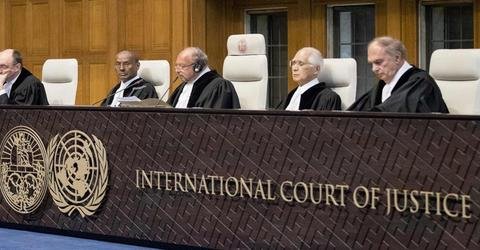
The International Court of Justice (ICJ) will on Thursday afternoon rule on India’s appeal against the death penalty handed to former naval officer Kulbhushan Jadhav by a Pakistan military court.

During its submission to the ICJ on May 15 at a public hearing, India had demanded the immediate annulment of Jadhav's death sentence, expressing fears that Pakistan could execute him even before the hearing at the ICJ was over.

The ICJ has in the past decided such appeals against the United States when Paraguay, Germany and Mexico approached. The Hague against death penalties awarded to their respective nations. In two of these cases, however, the US went ahead with the executions.

Paraguay vs United States
In April 1998, Paraguay had dragged United States to the ICJ alleging that the state of Virginia had violated Vienna Convention by failing to inform Angel Francisco Breard, a Paraguayan, of his right to contact the Paraguayan consulate for assistance after his arrest.

The Hague had called on the US to "take all measures at its disposal" to prevent the execution of Breard, pending a final decision in the proceedings instituted by Paraguay. However, Breard was executed on April 14, five days after the verdict. Paraguay later withdrew the case.

Germany vs United States
German national Walter LaGrand and his brother Karl were arrested in US state of Arizona in 1982 on suspicion of armed robbery and murder. In 1999, Germany instituted proceedings against the US for allegedly failing to inform the duo of their right to consular access, guaranteed by the Vienna Convention. The appeal was filed on the eve of the brothers’ execution. However, Karl was executed before the case started and Germany demanded that the US compensate his family and halt Walter’s execution till proceedings were pending. In its verdict the following day, the ICJ asked the US to ensure Walter was not executed during proceedings.

However, the US executed Walter on the very same day. Germany then modified its complaint, charging the US with violating international law by failing to implement the provisional measures. The US argued that the Vienna Convention did not grant rights to individuals, only to states. The ICJ ruled in favour of Germany on June 27, 2001.

Mexico vs United States
In January 2003, Mexico took the US to the ICJ over a dispute concerning alleged violations of the Vienna Convention with respect to 54 Mexican nationals who were sentenced to death in the US. They requested the court to ensure that the US should not execute or set execution dates for any Mexican national before the court passed judgment.

After establishing that it had jurisdiction to hear the case, the ICJ ruled that its jurisdiction lay only in establishing whether the US breached its obligations as listed under Article 36, paragraph 1, of the Vienna Convention and not functioning as ''a court of criminal appeal''.

The court, however, stressed that no execution dates should be fixed in any of the cases before it had ruled. It noted that three Mexican nationals were at risk of execution in the coming months, or possibly even weeks, and that "their execution would cause irreparable prejudice to any rights that may subsequently be adjudged by the court to belong to Mexico".

After deliberating for months, the court concluded that in 51 of the cases, the US had, in fact, breached their obligation by not informing the appropriate Mexican consular post without delay about the judicial process. By not doing so, the US had also deprived Mexico of the right to provide assistance to its nationals. The US was ordered to provide review and reconsideration of the judgments regarding the Mexican nationals and implement specific measures to ensure non-repetition.

North Korea missile detected by THAAD, programme progressing faster than expected - South Korea

North Korea's missile programme is progressing faster than expected, South Korea's defence minister said on Tuesday, after the U.N. Security Council demanded the North halt all nuclear and ballistic missile tests and condemned Sunday's test-launch.

Han Min-koo told South Korea's parliament the test-launch had been detected by the controversial U.S. THAAD anti-missile system, whose deployment in the South has infuriated China.The reclusive North, which has defied all calls to rein in its weapons programmes, even from its lone major ally, China, said the missile test was a legitimate defence against U.S. hostility.

The North has been working on a missile, mounted with a nuclear warhead, capable of striking the U.S. mainland. U.S. President Donald Trump's administration has called for an immediate halt to Pyongyang's provocations and has warned that the "era of strategic patience" with North Korea is over.

U.S. Disarmament Ambassador Robert Wood said on Tuesday China's leverage was key and it could do more. Han said Sunday's test-launch was "successful in flight". "It is considered an IRBM (intermediate range ballistic missile) of enhanced calibre compared to Musudan missiles that have continually failed," he said, referring to a class of missile designed to travel up to 3,000 to 4,000 km (1,860 to 2,485 miles).

Asked if North Korea's missile programme was developing faster than the South had expected, he said: "Yes." Han said the Terminal High Altitude Area Defense (THAAD) anti-missile unit deployed by the U.S. military in the South detected the North Korean missile, marking the first time the controversial system has been put to use since its deployment last month.

China has strongly opposed THAAD, whose radar it fears could be used to spy into its territory, despite assurances from Washington that THAAD is purely defensive. South Korean companies, from automakers to retailers and cosmetics firms, have been hit in China by a nationalist backlash over Seoul's decision to deploy the system.

The North's KCNA news agency said Sunday's launch tested its capability to carry a "large-size heavy nuclear warhead". Its ambassador to China said in Beijing on Monday it would continue such test launches "any time, any place".

The test-launch was a legitimate act of self-defence and U.S. criticism was a "wanton violation of the sovereignty and dignity of the DPRK", a North Korean diplomat told the U.N. Conference on Disarmament in Geneva on Tuesday.

DPRK are the initials of North Korea's official name, the Democratic People's Republic of Korea. "The DPRK will bolster its self-defence capabilities as long as the United States continues its hostile policies towards the DPRK and imposes nuclear threats and makes blackmail," diplomat Ju Yong Choi said.

The missile flew 787 km (489 miles) on a trajectory reaching an altitude of 2,111.5 km (1,312 miles), KCNA said. Pyongyang has regularly threatened to destroy the United States, which it accuses of pushing the Korean peninsula to the brink of nuclear war by conducting recent military drills with South Korea and Japan.

Trump and new South Korean President Moon Jae-in will meet in Washington next month, with North Korea expected to be high on the agenda, the South's presidential Blue House said. Moon met Matt Pottinger, overseeing Asian affairs at the U.S. National Security Council, on Tuesday and said he hoped to continue to have "sufficient, close discussions" between Seoul and Washington, the Blue House press secretary told a briefing.

''FURTHER SANCTIONS POSSIBLE'' In a unanimous statement, the 15-member UN Security Council on Monday said it was of vital importance that North Korea show "sincere commitment to denuclearization through concrete action and stressed the importance of working to reduce tensions". "To that end, the Security Council demanded the Democratic People's Republic of Korea conduct no further nuclear and ballistic missile tests," the council said, adding that it was ready to impose further sanctions on the country.

The North's foreign ministry rejected the statement, saying it infringed on its right to self-defence, particularly as the missile was test-launched at a sharp angle to ensure safety of neighbouring countries.

The UN statement also condemned an April 28 ballistic missile launch by Pyongyang. Following that launch, Washington began talks with China on possible new U.N. sanctions. Traditionally, the United States and China have negotiated new measures before involving remaining council members.

Will Donald Trump be Impeached This Year?

Bettors on both sides of the Atlantic are ramping up wagers in niche online markets over whether Donald Trump will serve out a full term as U.S. president in the wake of controversies surrounding the dismissal of FBI Director James Comey.

Some, such as the online political stock market PredictIt, have seen record volume during the last two days on contracts focussed on whether Trump will be impeached. Others based in the United Kingdom are drawing bets on the less-specific question of whether Trump remains in office until his term expires in January 2021.

The contract on PredictIt titled "Will Donald Trump be impeached in 2017?" saw volume of more than 100,000 contracts in the last 24 hours after reports of a memo written by Comey that said Trump had asked him to end the Federal Bureau of Investigation's probe into ties between former White House national security adviser Michael Flynn and Russia.

At one point early on Wednesday, the price of a "yes" contract on the impeachment question jumped to a record 33 cents, implying a 33 percent probability that Trump would be impeached. That compares with only 7 percent just over a week ago.

By late in the day, however, the price had slid back to 27 percent, just above where it ended late Tuesday at 24 percent.

PredictIt is jointly run by Washington political consultancy Aristotle and Victoria University in Wellington, New Zealand. All of its users are registered U.S. voters.

The bookmaker Paddy Power Betfair said bettors there had laid out more than 5,000 pounds ($6,470) on an early departure for Trump in the hours after it was reported Trump had asked Comey to shut down the FBI's investigation of Russia ties.

In all, the question of whether Trump will make an early exit has drawn more than $270,000 in wagers, while a related question on whether Trump will leave in 2017, 2018, 2019 or 2020 or later has garnered more than $480,000.

British betting firm Ladbrokes cut the price of a Trump impeachment to odds-on at 4-5 from 11-10, equivalent to about 56 percent probability that Trump will be removed from office.

"Political punters are wondering how many more scandals can Trump overcome," said Ladbrokes spokeswoman Jessica Bridge.

"And despite the short price on offer, money has poured in for the president to be impeached, leaving us with little option but to cut the odds."

Kulbhushan Jadhav Case: India Cited Three Instances at the ICJ in India's Favour

India cited three instances at the International Court of Justice (ICJ), at The Hague, to boost its own case seeking suspension of Kulbhushan Jadhav's death sentence.

Presenting its arguments against Pakistan for violating the Vienna convention and denying consular access to Jadhav, senior lawyer Harish Salve cited the examples of ICJ rulings in cases pertaining to Mexico, Nicaragua and Germany.

We tell you what these three cases are and how the International Court of Justice ruled in these cases:

1) Mexico versus United States of America, commonly called the Avena case (March 2004)

In its judgment, the International Court of Justice (ICJ) found that the United States had breached its obligations under the Vienna Convention on Consular Relations. The ICJ found that the United States was not allowing legal representation from Mexico to meet the latter's citizens, who were arrested and imprisoned for crimes in the United States.

Mexico had accused the United States of sentencing 54 Mexican nationals to death without allowing Mexico to exercise necessary legal options.

The ICJ had ruled that by "not notifying the appropriate Mexican consular post without delay of the detention of the 49 Mexican nationals", Mexico had been denied its right to "render assistance provided for by the Vienna Convention to the individuals concerned".

The United States was asked by the International Court of Justice to review and reconsider the convictions of Mexican nationals.

2) Nicaragua versus the United States of America (June 1986)

The International Court of Justice ruled in favour of Nicaragua which had accused the US of directing military and paramilitary actions against Nicaragua.

The ICJ ruled that United States of America "by training, arming, equipping, financing and supplying the contra (right-wing militant groups) forces or otherwise encouraging, supporting and aiding military and paramilitary activities in and against Nicaragua, has acted, against the Republic of Nicaragua, in breach of its obligation under customary international law not to intervene in the affairs of another State".

The court also found that US had breached its international obligations by causing certain attacks in Nicaragua in 1983-1984.

3) Germany versus Italy or the Jurisdictional Immunities of the State case (February 2012)

Germany argued that Italy had failed to respect its jurisdictional immunity by allowing civil claims to be brought against it in Italian courts for Nazi-era war crimes.

Germany also accused Italy of breaching its jurisdictional immunity by declaring that the decisions of Greek civil courts against Germany can be enforced in Italy.

The ICJ found that Italy could not ignore German immunity and ruled that the decisions of Italian courts infringing the German immunity have to rendered void.

(Source: Wikipedia, International Court of Justice)

Kulbhushan Jadhav Death Sentence Hearing at ICJ

To challenge death penalty handed out to Indian national Kulbhushan Jadhav, India has begin arguments at the International Cout of Justice in The Hague.

The last time two countries locked horns at the ICJ was when Islamabad sought its intervention over the shooting down of its naval aircraft in the Kutch region on August 10, 1999.

ICJ is holding a public hearing today at the Great Hall of Justice housed in the Peace Palace at The Hague in Netherlands where the two countries are presenting their case over the contentious Kulbhushan Jadhav issue.

The ICJ had on May 9 stayed the death sentence to Kulbhushan Jadhav after India had moved a petition before the UN body to seek justice for Kulbhushan Jadhav, 46, alleging violation of the Vienna Convention on Consular Relations by Pakistan after its 16 requests for consular access to the former naval officer was consistently denied.

From India's side a legal team led by former Solicitor General Harish Salve is arguing the case.

Here are the live updates:

2:20 PM: Visa application filed by Jadhav's parents are still pending: Harish Salve

2:09 PM: We got the news of Jadhav's execution from Pak media. Pakistani government did not inform us: Harish Salve

2:09 PM: Jadhav's execution is the breach of human rights: Harish Salve

2:09 PM: India made several requests to Pakistan for consular access which were denied, says Harish Salve.

1:50 PM: Unjust trial by Pakistan's military court is egregious violation of Jadhav's rights. Not giving Jadhav a consular access and the choice of a lawyer is against Vienna Convention.

1:45 PM: India says that Jadhav's execution will cause irreparable damage to rights of India and Jadhav.

1:40 PM: India has a very good case. It is clear Pak violated all rules, both in trial and human rights, says AG Mukul Rohatgi on ICJ hearing.

1:30 PM: Both the countries will get 90 minutes each to make their arguments. India is presenting its side now.

Why Is India Upset from China's 'One Belt One Road'?

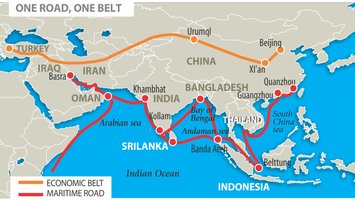
In the ancient days, China, and much of East Asia, was connected to the rest of the world through a route that got its name from China’s biggest export - silk. Today, the country is looking to rebuild a route that will connect Asia, Africa and Europe - a new Silk Road.

The One Belt One Road (OBOR) initiative will include roads, railways and ports and seems like a natural step for the world’s biggest trading country. After all, Asian Development Bank has said that the region, which is home to 60 percent of the world’s population, requires over $26 trillion in investment by 2030 to keep economies growing.

But the rest of the world - especially India - isn’t very happy about a project that it sees as not simply an economic initiative but as a means to push political influence and change status quo in some places. Kashmir, for example.

Chinese President Xi Jinping’s baby, the One Belt One Road was announced in 2013. Since then projects have been launched in various countries like Tajikistan, Thailand, Kenya and Vietnam financed by Chinese loans.

While some countries like Pakistan and Afghanistan are keen on OBOR, countries like India and Indonesia are wary because of the shift in status quo that this project could cause in sensitive areas like Kashmir and the South China Sea.

Chinese officials, however, reject the suggestion that the OBOR is a power play.

“The Chinese government has never wished to control any other country’s government,” a Cabinet official, Oi Xiaoli, told The AP. “We feel in contacts between countries, we need to talk about studying benefits, studying mutual profit.”
But Why’s India Worried?

As part of the OBOR, in Pakistan, there is a proposed $1.3 billion effort to expand the Karakoram Highway as part of the China-Pakistan Economic Corridor (CPEC). Now this involves power plants, roads and railways that will span the length of Pakistan and link China’s western region of Xinjiang to the Gwadar port, which was built with Chinese help.

But the CPEC runs through Pakistan-occupied Kashmir.

The establishment of a project with China in the disputed territory gives Pakistan’s occupation of the area a degree of legitimacy. And India’s clear stand on the issue is that Pakistan is illegally occupying Indian territory. Getting on board OBOR or talking to China and Pakistan about CPEC would be problematic for India as it could be seen as conceding ground to Pakistan. It would also involve a third country which goes against India’s stand that this is a bilateral issue which needs to be worked out between the two neighbours.

China held a conference centred around OBOR in Beijing and heads of states, governments and representatives from 29 countries and international organisations were present, including the US, Russia and the IMF. India stayed away from it but the global representation definitely legitimised the initiative.

Vladimir Putin, President, Russia Poverty, social chaos... the development level of countries and regions – all this creates a breeding ground for international terrorism, extremism as well as irregular migration. We shall not be able to live up to these challenges should we fail to overcome the stagnation of the global economic development.

Antonio Guterres, Secretary General, United Nations It is in our shared interest to show that the global economy can serve all the world’s people.

“Peace and development go hand in hand. ‘One Belt, One Road’ signifies that geo-economics must take precedence over geopolitics and that the centre of gravity should shift from conflict to cooperation. We see it as a path for overcoming terrorism and extremism,” said Nawaz Sharif, Prime Minister, Pakistan

Recep Tayyip Erdogan, President, Turkey This is going to be the kind of initiative that will put an end to terrorism.

Henry Paulson, Former Treasury Secretary, United States of America I know the United States has been among those countries apparently most skeptical of the ‘Belt and Road’. Simply put, the more China can demonstrate that the ‘Belt and Road’ initiative is open to outside participation in this way, the more it will be embraced by global and even American firms and suppliers.