A path to democracy could now exist in Sudan after a power-sharing agreement was reached on Friday between the ruling Transitional Military Council and opposition leaders. The deal was welcomed as progress by both sides.
Some pro-democracy activists, though, remain sceptical of the military’s intentions, drawing comparisons to the 2011 Egyptian revolution in which the late Mohamed Morsi – that country’s first democratically-elected president – was overthrown in a coup.
Some Sudanese activists view the outcome of the Egyptian uprising as a cautionary tale, and many protesters in the streets of Khartoum chanted “Victory or Egypt” after the removal of longtime President Omar al-Bashir.
In this episode, The Stream talks to Sudanese and Egyptian activists to break down the similarities, and differences, between their respective revolutions. Join the conversation.
In a period when journalism is considered to be under siege in Turkey, a specific group of foreign journalists are thriving in this very same country.
Currently, there are more than a dozen Arab TV stations based in Turkey - most of them based in Istanbul - beaming their content back home to the Arab world.
It was in the aftermath of the Arab Spring that hundreds of reporters from Egypt, Yemen, Libya and Syria all fled authoritarian governments, oppression, prosecution, and in some cases, war, to come to Turkey.
While Turkish reporters find this situation ironic and, at times, hypocritical, Arab journalists praise the freedoms they enjoy in Turkey - especially when compared with their previous experience at home.
The Listening Post spoke to three Arab journalists about life in exile, as well as the space that's been carved out for adversarial journalism aimed at the Arab world.
Hanaa Saleh, a Yemeni journalist who left for Turkey after Houthi militias overthrew the government in a coup said that her new haven allows her to "practise (her) profession freely … the mere notion of practising even the smallest amount of journalism was a crazy one, particularly for female Yemeni journalists. This was the reason I and numerous other journalist left Yemen and came to Turkey".
Following her arrival, Saleh began working with Belqees TV, where she focuses her attention on highlighting Yemeni concerns, which has further increased her feelings of gratitude to Turkey: "I, along with hundreds of media personnel and others who live in Turkey, truly appreciate this country … If all countries were to open their doors for me, I would not choose, apart from Yemen, any other country but Turkey."
Nader Fotoh, an Egyptian TV presenter, also left for Istanbul following the military coup in Egypt. According to Fotoh, "expatriates, immigrants, journalists and media personnel who live abroad have all left in support of the truth" - a notion that he tackles in his show Ghurba.
Unlike the Egyptian journalists who still reside in Egypt, Fotoh said that, in Turkey, he enjoys more journalistic privileges, including the freedom to discuss whichever topic he desires, or the ability to criticise whomever he wants.
"I can speak about and criticise whatever I want, the way I want, without offending anyone other than tyrants and oppressors. And without being told what to say," Fotoh said.
Similarly, Noor Haddad, a Syrian presenter of a satirical, social and political show, said that Istanbul has become one of the main destinations for Arab journalists because it offers the "space to experience a reasonable degree of journalistic freedom" compared with their home countries. "Criticising the president instigates a kind of madness, for he is President Bashar al-Assad and we are not allowed to approach nor criticise him."
However, in her show Noor Khanom, Haddad no longer shies away from criticising al-Assad, despite the backlash she often receives.
"It is my dream to present a satirical show in which I can criticise the head of the regime and to able to tell the head of the regime, or the biggest figure in the regime, that you are wrong. And to criticise and ridicule him without, as we say in Syria, spending the night at our 'Aunt's house' (the jail of the intelligence service).''
On the sidelines of the G20 summit in Japan, Saudi Arabia was successful in getting the Organization of the Petroleum Exporting Countries (OPEC) to extend oil production cuts until 2020.
But for Crown Prince Mohammed bin Salman (MBS), the price he paid may have been to sacrifice control of the oil cartel to Russia.
The Saudi economy needs oil prices around $80 a barrel to balance its budget. However, Russia only needs oil at $42 a barrel. This means Russia's rainy day fund has accumulated to $100bn from past production agreements.
So who is in OPEC's driver's seat, Saudi Arabia or Russia?
Johannes Benigni, chairman of JBC Energy Group, says, "It looks like the two have teamed up. Both are driving it."
"The biggest burden is carried by Saudi Arabia. Saudi Arabia wants to have a broad coalition because they feel otherwise it's really only down to them. So they are working very hard to bring a lot of different players to the table, and having Russia being part of it is for them instrumental, because it gives the impression that there is a wider group of players that are ready to cut."
While Saudi Arabia needs high oil prices, Russia doesn't. So why would President Vladimir Putin agree to the deal?
"Yes, it's true that the Russian budget requires maybe lower prices," Benigni says, "but I think it's also important for Putin to form alliances. And this is an alliance that, if it works out, is helpful for him ... So right now, he's in a much more comfortable position than the Saudis are."
According to Benigni, "There's definitely too much oil out there ... The tough message is, that if they want to maintain a stable market, they will have to cut even more next year ... The cut that was prolonged now for nine months, probably has to be fine-tuned again by the end of the year."
From start-up to unicorn: Challenges facing Middle East start-ups
The spectacular rise of Silicon Valley start-ups, including Uber, Lyft and Slack, gives the impression that success in the industry is easy.
In the Middle East, ride-hailing app Careem has also seen success, after it was bought by Uber for $3bn. But can that be replicated?
Mufeed Ahmed, cofounder of Qubicle and WashNow, and Majed Lababidi, CEO of Droobi Health, join Counting the Cost to talk about the path from idea to implementation in the Middle East.
"There are three top challenges every start-up has to face: one of them is fundraising, [number two is] hiring the right staff and number three is monetising the business to scale. I think the third one is very common to all the start-ups, internationally and in the region. But the first two, it's very difficult here in the region," says Lababidi.
"To have people trust in you from your idea to your launch stage, that's one of the most challenging things in the region," Ahmed agrees.
"In Silicon Valley, they are used to ideas of start-ups, and they have seen successful start-ups make a lot of money," says Lababidi. "Here in the region, we have money, we have angel investors, we have people ready to invest. But not in the idea stage, or not in the start-up stage."
However, he is also hopeful that things are changing.
"Now it's different," he says. "We witness Uber and Talabat and Careem ... they have very successful stories now, and so the mindset is changing."
Last month, Turkish President Recep Tayyip Erdogan held a rare press briefing for journalists in the country's media capital, Istanbul. In his opening remarks, Erdogan said that freedom of the press was of "vital importance" to him.
It was a statement that failed to square with the facts, let alone the numbers. Because for each of the last three years - ever since July of 2016, when an attempted coup failed to depose the president - Turkey has imprisoned more journalists than any other country.
For all of those jailed, however, the government has prosecuted a much longer list of media workers whose fates still hang in the balance. It's a state of limbo that has driven many of the accused into exile, to seek asylum abroad.
The Listening Post's Flo Phillips spoke to three Turkish journalists - all former editors at newspapers critical of the ruling AK Party - who have fled the country to avoid the prison terms that almost certainly awaited them.
Can Dundar was one of the most prominent newspaper editors in Turkey. He ran Cumhuriyet - a centre-left, secular paper that routinely investigated and took on the ruling government.
For the last three years, he has been living in Berlin. He came to Berlin after spending time in a Turkish prison for publishing a story exposing illegal arms support - weapons the Turkish intelligence services were providing fighters in Syria.
Dundar was sentenced to almost six years behind bars for revealing state secrets, but not before an Erdogan supporter fired two live rounds at him outside the court, missing both times.
Asked why he chose exile over remaining in Turkey to fight his appeal, Dundar explained that he had "lost trust in the Turkish judiciary."
"After the military coup attempt, Erdogan changed the whole system. The first thing he has done was to arrest the high judges who decided for our release. So they are still in jail. Without independent justice really you can't defend yourself. So that would have been to put in my head into the guillotine," he said.
Newspaper Zaman was among the more than 100 media outlets shut down during the government's purging of civil society following the attempted coup of 2016. Zaman's ties to the Gulenist movement - followers of the Islamist leader Fethullah Gulen whom the government blamed for the insurrection - made it an obvious target.
Yet for Mahir Zeynalov, former Online Editor for the paper's English-language edition, Today's Zaman, his troubles with the government - as with those of Can Dundar - preceded the coup.
"On the 25th of December, 2013 I wrote an article about the corruption case which targeted President Erdogan," Zeynalov told The Listening Post, from his new home in Washington, DC. "And on that day President Erdogan pressed charges against me, seeking up to six years in prison."
For Zeynalov, the corruption allegations against the president constitute one of several taboo topics which Turkish journalists broach at their peril. "Another", he says, "is the Kurdish issue."
Cagdas Kaplan, former editor of the pro-Kurdish newspaper Yeni Yasam, was one of 32 Kurdish journalists arrested back in 2011, and served a year in jail. He had reported on alleged human rights abuses by Turkish government forces against the country's Kurdish minority.
At the time of his departure for Athens earlier this year, Kaplan faced another 20-25 years behind bars. In his view, the only prospect for a resurrection of press freedom in Turkey is a fight-back by the journalists themselves.
"We have to fight for it, just like our other rights. We have the power to dig up these fundamental rights from the grave. But we can only do that by resisting, otherwise, it's impossible."
Eight people jailed in one of the biggest ever cases of slavery in Europe
They were told they’d get jobs and money, and enjoy a new lifestyle.
But hundreds of desperate people became victims of the largest modern slavery operation ever uncovered in the UK.
They were trafficked from Poland, forced to live and work in horrific conditions, and threatened if they tried to escape.
Eight members of a crime gang have now been jailed for a total of more than 55 years in the UK.
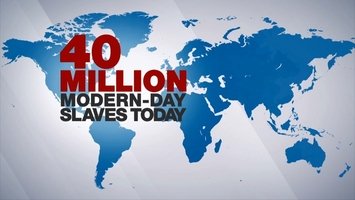
With an estimated 40 million people living in slavery around the world, what can be done to stop modern slavery?
The United Nations peacekeeping mission in Mali, also known as MINUSMA, faces unprecedented challenges. Now in its sixth year, it is caught in the middle of an unfolding spiral of violence that is moving closer to the capital and that has already been spreading to neighbouring countries.
The initial violence took off shortly after the fall of Muammar Gaddafi's regime in Libya in 2011. Armed groups and weapons entered Mali from the north, intersecting with already existing tensions between groups of different ethnic and religious belonging.
The conflict has since changed and spread - now overtaking parts of central Mali.
"The international community needs to be more interested in what is happening in Mali," Mahamat Saleh Annadif, the special representative of the UN secretary-general and head of MINUSMA, tells Al Jazeera.
"We say we have wiped out the Islamic State in Iraq, in Syria. Do people ask the question where these people are going?" asks Annadif. "There is a breeze going towards the Sahel."
As the president of Mali used to say: Mali for the moment is a dam, if it gives in, it risks invading the rest of Africa as well as Europe.
Mahamat Saleh Annadif, Head of MINUSMA, the UN peacekeeping mission in Mali
Armed groups such as ISIL and al-Qaeda are gaining strength in Mali. New armed groups have entered the fray, some taking advantage of longstanding pastoral and inter-communal tensions, causing deadly violence to escalate between the Fulani and Dogon communities.
"Inter-communal conflict has always existed. It is part of the society. But in the past, there were the traditional mechanisms ... to manage this conflict," says Annadif. "The terrorists came, they chased out all these people ... Today the majority of the religious leaders of these customary chiefs are in the big cities in the capitals and they [armed groups] have taken hostages of these communities."
Annadif says the international community must "pool our resources" and do more to stem the rising tide of violence in the Sahel. He warns that a failure to do so would have wide-reaching effects.
"As the president of Mali used to say: Mali for the moment is a dam, if it gives in, it risks invading the rest of Africa as well as Europe," he says. "The Sahel is becoming an open military arsenal. There are more than 60 million weapons circulating in the Sahel. If the Europeans and the other powers are not stopping it, it is there in the Sahel, that's what will obviously contaminate Europe and contaminate the rest of the world."
According to Annadif, the crisis is complex and while the Malian army is in the process of reconstituting itself, it has suffered a shock and needs to be supported.
"The day we help the Malian security forces to redeploy to the territories, these terrorists will have no place, it will be like when they fled Iraq, like they fled Syria, like fleeing Libya. They will flee to some other place," he says. "That's why it is extremely important for the international community to stand together and take seriously what is happening in Mali, which is contaminating the entire Sahel."
He believes the 2015 peace accord signed between the Malian government and some armed groups is the best way for the country to achieve peace, even though he admits there have been some delays in its implementation.
"The agreement for peace and reconciliation has no alternative," he says. "Today it is the only tool that exists to help Malians make peace. But we need to push Malians to accelerate the pace of its implementation."
The UN secretary-general has called on MINUSMA to change its priority, focusing on the 2015 peace agreement and helping the state to re-establish its control over the centre of the country.
But MINUSMA also faces challenges unlike other peacekeeping missions: it costs $1bn and is currently the deadliest mission in peacekeeping history - with nearly 200 soldiers killed since 2013. Some UN peacekeepers are now also leaving, including those from the Netherlands who are set to withdraw.
"I dare to hope that this presence of the MINUSMA is only temporary, that it will be as short as possible and that the Malians can find this national consensus, that they can restructure their army and they can take control of their destiny," Annadif says.
"We still need the United Nations. Peace missions are still needed, but peace missions alone can not do."

In this special edition of the show, we hear from two groups of exiled journalists: those on the run from Turkey, and others who have found sanctuary there.
Turkey: No country for bold journalists?
Last month, Turkey's president Recep Tayyip Erdogan held a rare press briefing for journalists in the country's media capital, Istanbul.
In his opening remarks, Erdogan said that freedom of the press was of "vital importance" to him.
It was a statement that failed to square with the facts, let alone the numbers. Because for each of the last three years -- since July of 2016, when an attempted coup failed to depose the president -- Turkey has imprisoned more journalists than any other country.
And alongside all of those jailed, the government has prosecuted a much longer list of media workers whose fates still hang in the balance.
Following Ankara's post-coup purge of the Turkish judiciary, for many, a fair trial is a seemingly distant prospect; a situation that has driven many of the accused into self-imposed exile.
In the first part of this special edition of the programme, The Listening Post's Flo Phillips speaks to three Turkish journalists - all former editors at newspapers critical of the ruling AK Party - about the cases against them, life in exile and the decline of press freedom in Turkey.
In Ankara's defence: An interview with Cem Kucuk
We wanted to get the Erdogan government's response to the allegations made by Can Dundar, Mahir Zeynalov and Cagdas Kaplan in the opening segment of this Listening Post special.
We requested interviews with a number of senior government officials, however none of them agreed to speak with us. So we asked for an interview with Cem Kucuk, an Erdogan loyalist and a prominent face on the privately-owned TV channel, TGRT.
Kucuk agreed, but with strict conditions. He said he did not want to answer any questions about the Turkish government's handling of specific journalists - in particular, the exiled newspaper editors we interviewed. He said our questions would be better answered by a representative of the state. He did however defend certain other statements about the media made by President Erdogan and one of his closest advisors.
Istanbul: Turkish haven for Arab journalists
Journalism may be under siege in Turkey, but there is a specific group of journalists - foreign ones - who are thriving there.
In the aftermath of the Arab Spring, hundreds of reporters from Egypt, Syria, Yemen and Libya fled authoritarian governments, oppression, prosecution and in some cases war - to come to Turkey, finding a sanctuary in which to produce the kind of journalism that would be impossible back home.
There are now more than a dozen Arab TV stations based in the country beaming their content back to news audiences across the Arab world.
The irony, and apparent hypocrisy, to all this - Turkey jailing its own dissident journalists while playing host to those from other countries - is not lost on either Turkish reporters or their foreign colleagues. They understand the politics at play.
The Listening Post spoke to three Arab journalists about life in exile, as well as the space that has been carved out for adversarial journalism aimed at the Arab world.
Iran urges Britain to release vessel detained off Gibraltar
An Iranian oil tanker is at the centre of a growing international dispute.
British marines boarded and detained the ship on Thursday as it was sailing near Gibraltar, a British territory on Spain's south coast.
The UK believes it was violating European Union sanctions by carrying Iranian oil to Syria.
Spain says it was the United States that ordered the vessel be stopped.
Iran condemned what it called an illegal interception.
So what's behind this dramatic move? And as tension increases between the U.S. and Iran, is Europe caught between a rock and a hard place?
Rahul Ghandi quits as leader of India’s National Congress Party after heavy election defeat.
Mention politics in India, and the name Gandhi would almost certainly come up.
The family has been at the centre of public life for decades.
But the latest member of the Gandhi dynasty is looking to step away from the spotlight.
Rahul took over leadership of the Indian National Congress from his mother Sonia in 2017, and has long sought to become prime minister, following in the footsteps of his father, grandmother and great grandfather.
But the party suffered big losses in this year’s elections to Prime Minister Narendra Modi’s BJP.
And 49-year-old Gandhi accepted responsibility for the defeat.
So what impact will his resignation have on Indian politics?
As Hong Kong marked the 22nd anniversary of its return to Chinese rule on Monday, anger over a proposed extradition bill reached a new high as protesters broke into Hong Kong's Legislative Council building. Masked demonstrators briefly occupied the council's chambers, leaving anti-government graffiti on its walls and defacing portraits of the city's political leaders.
Widespread demonstrations have drawn more than a million people to the streets over the past month. Protesters are calling for the withdrawal of a bill that would allow Hong Kong citizens to be tried for crimes in mainland China. But Hong Kong leader Carrie Lam stopped short of protesters' demands to scrap the bill entirely. In a news conference on Monday, she said the extradition bill would not be debated any further and would expire at the end of the council's term in July 2020.
Many Hong Kong citizens see the extradition proposal as a threat to the "One Country, Two Systems" principle that allows Hong Kong to have an independent judiciary and greater civil liberties than mainland China. The anti-extradition protests have also revived demands for direct democracy in the former British colony.
In this episode, we'll discuss the controversy surrounding Hong Kong's extradition bill and the protest movement it helped spark.
Copyright © 2026 SHAHEEN BAGH NEWS All rights reserved. Powered by USMAN EDUCATION AND WELFARE SOCIETY. The SHAHEEN BAGH NEWS is not responsible for the content of external sites. Read about our approach to external linking