Magazine

Are influencers who promote flat-belly tea endangering their fans?

People have been drinking tea to promote good health for centuries. But there is rising concern over dangerous detox teas -- and their promotion by influencers on Instagram.

Detox teas have gained a worldwide following thanks to some high-powered celebrity endorsements. The products claim to help people lose weight and boost immunity effortlessly, but this has not been proved.

Pushback against the teas is growing. Health officials say the teas could cause dehydration and liver failure. Some celebrities including actor Jameela Jamil say promoting the products is irresponsible. And some lawmakers in the US are even calling for the regulation of the teas' sale and promotion to "protect consumers from harm".

We'll take a look at detox tea claims versus reality, social media marketing tactics including celeb endorsements, and whether these products (and others) need oversight.

How is the world dealing with the waste disposal epidemic?

It's become a problem of global proportions. According to the World Bank, around two-billion tonnes of waste is produced every year, and world leaders are struggling to figure out what to do with it all.  

Should it be buried, recycled or shipped off to another country?

It's a issue they are grappling with right now in East Delhi, India. They are fighting to contain a 65-metre high mountain of rubbish that gets larger every year.

Similar scenarios are repeated globally.

One of the problems is that recycling is now an estimated two-hundred-billion dollar industry, a huge incentive to limit what's done to change directions in the waste business.

So what are the answers?

When will Hong Kong protests end?

The summer of discontent looks set to continue as grievances widen.

Weeks of protests in Hong Kong were initially sparked by the introduction of a controversial extradition bill in parliament that would have seen people sent to mainland China to stand trial.

The government suspended the bill, with the Chief Executive even saying it was ''dead.''

But that’s not satisfied tens of thousands of people in Hong Kong who are frustrated at what they see as growing political interference from Beijing.

The parliament in the semi-autonomous Chinese territory’s been vandalised.

Towns near the border with China have seen unprecedented rallies.

And police and protesters have faced off in violent confrontations.

So what will it take to end the demonstrations?

'I felt I was going to die': Battling domestic violence in Iraq

Iraq is emerging from more than a decade of intermittent conflict. People are rebuilding their cities and institutions. At the same time, they are also pursuing reconciliation and trying to reconstruct their national identity.

Women hope they will be given more of an expanded role in the political sphere and that they will be given greater rights. But it has been an uphill battle.

Iraq's penal code allows husbands to discipline their wives, and there is currently no law criminalising domestic violence. For almost a decade, women's rights groups have been pushing parliament to pass a law that would change that - but it has always stalled.

"The law in Iraq doesn't give women their rights," says Lena, a domestic violence survivor whose abuse left her with physical and psychological ailments.

We don't have laws in our society to prevent men from hurting women, and to protect women, and to put red lines for men not to cross.

Lena, domestic violence survivor

"I tried so many times to leave (my ex-husband) ... At the end of the day, I felt that I was going to die," she says.

But the abuse was just the beginning of her ordeal. After she left her husband and filed a police report, he turned the tables against Lena and her family, accusing them of kidnapping him.

At the end of the day, Lena was found guilty and spent 16 months in prison.

Lena blames the wide-reaching corruption in the judicial system, "from the lowest clerk to the highest judge."

She says Iraqi women who are unemployed or not well educated, especially those who have children, are forced to "bear everything".

"We don't have laws in our society to prevent men from hurting women, and to protect women, and to put red lines for men not to cross," she says.

There are no updated national figures for domestic violence in Iraq; the most recent data available, from 2012, estimated that one in five women were victims.

Civil society groups say, based on the growing number of women seeking assistance, they believe the figure is much higher today.

"The life, the traditions, is so hard on the woman, on the girl," says Hanna Edwar, a longtime activist and founder of a non-profit social services group called al-Ammal.

She calls domestic violence "a national crisis" and attributes the increase to a number of factors, including political instability, poverty, conflict, outdated traditions and lack of rule of law. She says corruption also makes it difficult for victims and survivors to get justice.

Edwar has taken the lead on the effort to raise awareness about domestic violence and is pushing to pass the law offering victims greater protection.

"This year we are really very optimistic about it (passing)," she says. "Because it's not only our demand as civil society. It is now the demands of the government (as well)."

In the meantime, many women like Lena are still awaiting recognition of the crimes committed against them.

"When I talk about what happened to me, people dismiss it as just a story ... I have not been able to convince anyone in our government to change our laws to protect women," Lena says. "I have never received justice."

Boycott, resist, push back: Shifting narratives on Israel in the US

The United States's support for Israel, usually at the expense of Palestine, has been unwavering - one of the most reliably bipartisan issues in US politics - with Republicans and Democrats standing with their Israeli allies through thick and thin.

But times are changing; as is the narrative. You can see it online, in print, as well as in the halls of Congress.

In this special episode of The Listening Post, Richard Gizbert travels across the US to examine some of the key moments that have revealed how the discourse on Israel is shifting.

Will there be another war in the Gulf?

The United States, UK and Iran all agree:they don't want war, but tensions are rising by the day.

Iran accuses Britain of being a servant of the U.S. as it demands the return of an oil tanker seized off Gibraltar. It’s been suggested British Royal Marines boarded the vessel at the request of America.

And the UK is looking at boosting its military presence in the Gulf after an apparent close encounter with Iran’s Revolutionary Guard just days later.

The U.S. meantime is turning the screw further on Iran's already faltering economy, and Britain finds itself in an awkward position.

It's working with Europe to try and save the 2015 Iran nuclear deal, which the U.S. has abandoned. But it also needs to maintain close ties with Washington as it seeks to leave the European Union.

The situation with the tanker has infuriated Iran with the foreign minister demanding Britain return the ship or face what he called 'the consequences'.

Is the UK's special relationship with US under threat?

What started as a leak of secret diplomatic memos to a British tabloid newspaper has led to the resignation of a top ambassador and questions about the UK's position in the world.

Kim Darroch felt compelled to quit as Britain's envoy in Washington after a row over leaked memos.

The diplomat had described Donald Trump and his administation as insecure, inept and dysfunctional.

The U.S. President responded with a barrage of angry tweets, calling Darroch ''very stupid.''

Boris Johnson, Britain's likely next prime minister, refused to publicly support the ambassador.

So how will this incident affect the UK's ties with its closest ally?

Can Georgia and Russia resolve their difference?

Relations worsen following Georgian protests and insults against Russia.

Georgia and Russia have had a tense relationship for decades, stretching back to the days of the Soviet Union.

Relations are worsening, 11 years after the two countries fought a war over disputed regions.

An invitation for a Russian politician to speak in Georgia's parliament provoked riots in Tbilisi.

Regular protests since have demanded the withdrawal of Russian troops from the breakaway regions of Abkhazia and South Ossetia.

President Vladimir Putin responded by banning Russia's airlines from flying to Georgia.

And Russian MPs demanded trade sanctions, after a Georgian TV host launched a foul-mouthed tirade at Putin.

What can be done to calm the tension?

Why are European aid workers arrested for helping refugees?

The recent high-profile arrest of a German boat captain who brought Africans seeking refuge into an Italian port has highlighted the legal challenges that humanitarians across Europe face when providing help to people fleeing war and persecution.

Carola Rackete was accused of endangering police officers when her boat Sea-Watch 3 trapped a police patrol vessel as she brought about 40 people to land at Lampedusa, Sicily. She was held under house arrest until a judge ordered her release pending further investigation. But other humanitarians face an uncertain future. Two volunteers with the Emergency Response Centre International (ERCI) are facing a court case in Greece on charges of people smuggling, money laundering and espionage; they are among 104 people who were investigated or prosecuted for providing humanitarian aid in 2018, according to a report by a migration and asylum monitoring organisation released in June.

Humanitarian workers and agencies are pushing back through the courts, challenging a European Union framework they say enables member states to arrest volunteers during the course of their life-saving work. But all the while, the climate for thousands of people seeking safety in Europe grows colder and darker, with border officials in Hungary reportedly denying food to detained asylum seekers in an attempt to force them to abandon their application.

We'll meet humanitarian volunteers who have put their own liberty on the line to help people in need and consider whether Europe can be counted on to shelter and protect the vulnerable.

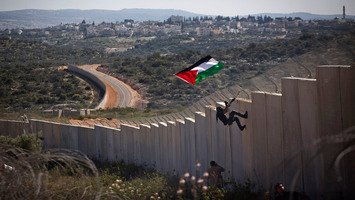
Has Israel's wall brought security?

Israel's separation wall still stands and continues to affect the lives of Palestinians in the occupied West Bank.

15 years ago, the International Court of justice ruled against Israel's separation wall.

It said, the state can not use the 'right of self-defence' to build and maintain the barrier.

For Palestinians, it is a symbol of military occupation and an attempt by Israel to grab more land.

Once completed, the wall will stretch through the occupied West Bank and East Jerusalem at a length of over 700 kilometres long.

It's affected the lives of hundreds of thousands of palestinians.

And the number of illegal Israeli settlements have gone up in the meantime.

Israel argues it's protecting its security.

But at what cost to peace?