Some statements by former Vice-President of India Hamid Ansari have caused some resentment among the class which has right wing tendencies.
Indeed, in a virtual event, on 20 November 2020, Hamid Ansari said that before the 'Corona epidemic crisis', Indian society had fallen victim to two other epidemics - 'religious bigotry' and 'aggressive nationalism'.
Adding to this, Ansari also said that 'Desh Prem' is a more positive concept than the two as it is military and culturally defensible.
But his statement has upset a particular class. This is being discussed on social media. People are writing that this thinking about the nationalism of Hamid Ansari, who held some of the biggest positions in India, is indignant.
State level spokesperson of Bharatiya Janata Party Gaurav Goyal has written on Twitter, "The reality of the Congress has once again surfaced. These are the people who were made the Vice-President of this country by the Congress Party having a biased attitude. ''
Former Maharashtra Chief Minister and senior BJP leader Devendra Fadnavis said on Ansari's statement that Hindutva was never radical. Hindutva has always been tolerant. Hindutva is an ancient lifestyle of this country. Hindus never attacked anyone or any country.
However, the Congress party has justified Ansari's statement. Congress leader Tariq Anwar said that Ansari's statements to the BJP are special because it directly targets the agenda of the BJP and the Sangh Parivar.
Former Vice-President Ansari said this on the occasion of the digital release of Congress leader Shashi Tharoor's new book 'The Battle of Belonging'.
On the occasion of the book release, he expressed concern about the current situation in India. He also said that 'today the country is seen to be at risk from such ideologies which try to divide the country on the basis of the imaginary category of' us and them '.
Ansari said that "the dangers of nationalism have been written many times." It has been called 'ideological poison' on some occasions in which there is no hesitation in transferring and transferring individual rights. ''
Hamid Ansari also said in the program that "in a short span of four years, India has taken a new political vision of 'cultural nationalism' from the basic perspective of a 'liberal nationalism' which is in the public domain. It has reliably done home.
Former Jammu and Kashmir Chief Minister Farooq Abdullah also participated in the discussion on the occasion of book release.
He also said on this occasion that in 1947 we had an opportunity to go with Pakistan, but my father and others thought that the principle of two nation was not good for us.
Farooq Abdullah said that he is never going to accept the way the current government wants to see the country.
Reliance Industries in India has recently invested Rs 620 crore in NetMedes, a Chennai-based online pharmacy company.
Reliance Retail Ventures has made these investments in Vitalik Health and its affiliates. The companies in this group are known as NetMeds.
With such a huge investment in Reliance Industries' online pharma company, there is a lot of competition expected to start in online pharmacy or e-pharmacy in India.
Amazon has already entered this. The pilot project of its Pharma Service has started in Bengaluru. At the same time, Flipkart is also preparing to come in this area.
Netmeds is an e-pharma portal selling prescription-based medicines and other health products. This company does home delivery of medicines.
Similarly, there are already many startups in the field of e-pharmacy. Such as 1mg, PharamaEasy, Medlife etc.
Before the arrival of these big players, the debate has started again about the e-pharmacy platform which was in controversy.
Institutions representing retailers and pharmacists have raised concerns over snatching employment of millions of people. However, e-pharma companies deny this.
Letter written to Mukesh Ambani
The All India Organization of Chemists and Druggists Association (AIOCD) has written a letter to Mukesh Ambani, Chairman and Managing Director of Reliance Industries Limited, objecting to the investment in his netmaids.
The letter reads, "It is very sad to see a company of Reliance industry investing in an illegal industry." The letter says that the e-pharmacy industry is not under the Drugs and Cosmetics Act (Drugs and Cosmetics Act) Aata, which regulates the import, manufacture, sale and distribution of medicines.
AIOCD has written one such letter to Amazon. The letter has also been sent to India's Prime Minister Narendra Modi, Union Home Minister Amit Shah, Union Commerce and Industry Minister Piyush Goyal and other ministries.
Working model threatens jobs
With big companies taking steps in the e-pharmacy industry, the concerns of retailers and pharmacists have increased. The institutions representing them have been objecting to e-pharmacy in two ways.
First, they believe that the working model of e-pharmacy platforms can lead to the jobs of millions of retailers and pharmacists. Their business may be closed.
Second, they raise questions about the legal aspect of operating e-pharma companies.
Abhay Kumar, president of the Indian Pharmacist Association, says that the working model of the e-pharma platform will gradually eliminate the jobs of pharmacists.
Says Abhay Kumar, "E-Pharma platforms will create their own stores, warehouses or inventory, where they will store medicines directly from companies or distributors and then supply medicines from there itself." In such a situation, the role of the local chemist shop will end. ''
There is already a crisis on pharmacists' jobs. The vacant posts of pharmacists in hospitals are not filled. After three years of study, the youth find themselves unemployed. So, as a chemist, do they want to take away the means of earning? "
Giving high discounts to e-pharma companies is also a cause for concern for retailers. AIOCD President J.S. Shinde says that a small retailer will not be able to compete with them in the way e-pharma companies offer more discounts.
Js Shinde said, "Retailer gets 20 percent and wholesaler 10 percent margin. However, new players coming to e-pharmacy are offering 30 to 35 percent discount. They can give deep discounts, can also cause some losses, but, the general retailer does not have that much capital. This will be a problem for the customers as they will be monopolized when retailers move out of the market and it will be difficult to control prices.
He says that there are around eight and a half lakh retailers in the whole country and one and a half lakh stockists and substockists, whose livelihood is about to be snatched away. Together, the working people and their families will become destitute of about 19 million people. It will be a double whammy for people suffering from recession due to Corona virus.
What do e-Pharma companies say
However, e-pharma companies completely deny all these allegations. He says that there are misconceptions among people about his working model. Their way of working will increase convenience for customers rather than take jobs, make it easier to access medicines and increase demand for pharmacists.
There are two types of business modus operandi in online selling of medicines. One marketplace and the other inventory led hybrid (online / offline) model.
In the marketplace model, e-pharmacy platforms take online prescriptions from the customer. These prescriptions can be uploaded directly to the website or app, through WhatsApp, email or fax. The prescription is then delivered to a local licensed pharmacist (chemist), from where the medicine is taken and delivered to the customer.
At the same time, in the inventory model, the company that runs the e-pharmacy platform keeps the stock of medicines itself and delivers the medicines on a prescription basis. That online platform itself acts as a chemist.
Some companies are working on a hybrid model. She also maintains a warehouse or store of medicines and also delivers medicines through contact with local chemists. They have a license to build a warehouse or store of medicines.
Now retailers and pharmacists have concerns about the inventory or hybrid model as the role of chemist shops will end in this.
But, Digital Health Platform, an association of leading e-pharmacy companies, says that e-pharma platforms will operate solely on the marketplace model.
"There are many misconceptions about the e-pharmacy model," said Dr Varun Gupta, Convenor of Digital Health Platform. The e-pharmacy marketplace model will help the existing pharmacy deliver online services. This will create a network by connecting different pharmacies on one platform. With this, inventory management will be better, access will increase, prices will be reduced and customers will get better services. ''
Doctor Varun says that the Covid-19 epidemic has shown how the two mediums can work together in the sale of drugs. People have insecurity and anxiety about any beginning. Similar opposition has also been seen earlier when new technology comes.
An expert associated with the online pharmacy industry also says that they do not give too much discount. If someone continuously gives such a discount, then they will not be able to survive in the market. E-pharmacy platforms fix their margins with local pharmacists.
Abhay Kumar says that if companies adopt a marketplace model and create opportunities for pharmacists, then they have no objection but this is very unlikely. Even now some platforms are working on hybrid models. They have more benefit in this. Therefore we oppose it.
E-pharmacy platform and existing law
E-Pharma companies have been working in the Indian market for many years but are still at a very small level. The use of the e-Pharma platform has also increased in lockdown due to Corona virus. They are mostly used for chronic medicines, ie medicines of long-standing diseases.
In terms of statistics, according to a report by the Economics Times, the market for drugs for e-pharmacies in India can reach $ 18.1 billion by 2023. It was $ 9.3 billion in 2019.
But, the validity of the e-pharmacy platform has been questioned for a long time. Even this matter has reached the court.
Js Shinde says, "E-pharmacies are not currently covered under the Drugs and Cosmetics Act, so it is illegal to run them. The act does not mention online sale of drugs. So it is difficult to monitor and control them."
At the same time, e-pharma companies have been claiming that they are working in the legal realm. Dr. Varun Gupta explains that the e-pharma business model falls under the Information Technology Act, 2000, the concept of middleman, and licensed pharmacists (who deliver prescription drugs) are covered under the Drugs and Cosmetic Act. E-Pharma companies are operating under this model.
E-pharmacy draft
After the objections of many parties, on 28 August 2018, a draft of the rules was prepared to regulate the online sale of drugs, i.e. to bring them under the law. Based on this, the Drugs and Cosmetic Rules, 1945 were to be amended. Opinion was sought from general public / stakeholders on this draft.
This draft includes registration of e-pharmacy companies, inspection of e-pharmacy, process for distribution or sale of drugs through e-pharmacy, prohibition of advertisement of drugs through e-pharmacy, grievance redressal mechanism, e-pharmacy There were provisions related to monitoring, etc. But, nothing further has been done on this.
When the matter reached Delhi High Court in December 2018, the court ordered a ban on the online sale of drugs without a license. After this, the single bench of Madras directed not to do online business of medicines till the draft rules were notified. However, in January 2019, the Division Bench of Madras stayed this instruction.
It is discussed that the government is considering amending the Drugs and Cosmetics Act so that online sales of medicines can also be brought under its purview.
However, the Pharmacists and Retailers Association is considering all aspects of this and is demanding to make a law related to it.
Js Shinde says that in countries where the e-pharmacy industry is running, what are its effects and what should be done in India to avoid them. It should not be allowed without considering all the sides.
They told that we will give 21 days notice to the government that they will listen to our concerns and take any step. If there is no response from the government, then all the drug dealers will go on strike.
Of the total deaths due to corona virus in India, 70 percent of deaths occurred in Andhra Pradesh, Delhi, Karnataka, Tamil Nadu and Maharashtra.
At the same time, Maharashtra, Andhra Pradesh, Karnataka, Uttar Pradesh and Tamil Nadu have 62 percent active cases of corona virus.
The Health Ministry gave information in this regard in the press conference on Corona virus.
Rajesh Bhushan, Secretary, Ministry of Health said that in view of the increasing cases and deaths of Corona in the capital, Delhi Government is being talked to. He informed that some special instructions have been given to the state government. If they are followed then the cases may come under control.
Regarding the increasing cases of Corona virus in India, he said, "Every day positive cases are increasing. This should be seen in the context of the entire population. The government has adopted a hierarchical approach to open up the economy by ensuring adequate testing capacity, giving clear guidelines to clinical treatment protocols and enhancing hospital infrastructure. ''
He said that compared to other countries, there are very few cases of kovid per million (population) in India. There are also very few deaths per million in India. There have been 49 deaths per 1 lakh. At the same time, there are 2,792 cases per million population of corona virus.
The Health Ministry also informed that a second sero survey has started in 70 districts across India. The results will come in the next two weeks.
Also told that 11 lakh tests of corona virus have been done in the last 24 hours. So far, more than 4.5 crore tests have been conducted in the whole country.
There has also been a decrease in the corona case in some states. According to the Health Ministry, there has been a weekly decrease of 13.7 percent in active cases in Andhra Pradesh. Similarly, there has been a weekly decrease of 16.1 percent in Karnataka, 6.8 percent in Maharashtra and 23.9 percent in Tamil Nadu and 17.1 percent in Uttar Pradesh.
Maharashtra has seen a 7 percent decrease in corona virus cases in the last three weeks.
According to data from the Center for Monitoring Indian Economy (CMIE), around 120 million people have lost their jobs since a month of lockdown in India. Most of the people are from the unorganized and rural areas.
Most of India's 400 million jobs are in the unorganized sector.
According to CMIE, during the lockdown, seven crore people who lost their jobs in the month of April have returned to work.
This has happened again due to the resumption of economic activities and good crop yields, because it has not only provided employment to the people on a large scale, but also has given additional work to people in the agricultural sector.
The National Level Job Guarantee Scheme has also helped in this, but this good news is limited here only.
According to CMIE's assessment, 1.9 million people lost their jobs during lockdown in the organized sector.
Another report by the International Labor Organization and the Asian Development Bank estimated that more than four million Indians under the age of 30 have lost their jobs due to the epidemic. People aged 15 to 24 years have been the most affected.
Mahesh Vyas, managing director of CMIE, says, "Most of the people under 30 are affected. Companies are hiring experienced people and young people are getting hit by it."
Many believe that this is the most worrying aspect of India's slowing economy.
Mahesh Vyas says, "Trainees and those working on probation have lost their jobs. Companies are not giving jobs on campus. There is no appointment of any kind. When the next batch of youth looking for work in 2021 will be graduates, they will join the army of unemployed."
Not giving jobs to newly graduated people will mean adverse effects on income, education and savings.
Mahesh Vyas says, "This will affect job seekers, their families and the economy."
The reduction in salary and sluggish demand will also negatively impact household income.
In last year's CMIE survey, it was found that about 35 percent people believed that their income has improved compared to last year whereas only two percent of the people believe this year.
There has been a reduction in income of people from lower class to upper middle class.
According to a report, the salaried people extracted nearly four billion dollars from their essential savings in the four months of the lockdown so that they can take care of the job cuts and salary cuts.
Mahesh Vyas says, "The decrease in income has been particularly hit by the middle class and the upper middle class."
Due to no job, more and more people are snatching business from their hands. But this is not a sudden change.
A study conducted in 2017 by economist Vinoj Abraham clearly revealed that this is probably the first time there has been such a steep decline in post-independence employment between 2013-14 and 2015-16. The study was based on data gathered from the Bureau of Labor.
Labor participation reflects the active workforce in the economy. According to CMIE, this labor participation fell from 46 per cent to 35 per cent after the demonetisation enacted on 8 November 2016. This affected India's economy very badly. Currently, the unemployment rate of the current 8 percent does not reveal the reality of this worsening situation.
Mahesh Vyas says, "This happens when searching for a job becomes useless because the job does not exist."
Economic insecurity has increased a lot in India.
Researchers Marianne Bertrand, Kaushik Krishnan and Heather Schofield have studied how Indians are tackling the challenges of lockdown?
These researchers have found in their study that only 66 percent of the households have more than two weeks of resources to cope with the economic crisis.
India's Finance Minister Nirmala Sitharaman has also said that the government does not deny going to jobs.
The number of new jobs has also fallen by 60 per cent in June compared to the monthly average of the previous financial year.
Last week Nirmala Sitharaman also said, "India is going through an unusual situation like a divine event ... during this time we can see a contraction in the economy."
The cases of corona infection in India are going to be close to 38 lakhs and the economy is stagnant. The scope for a complete recovery in the economy seems far-fetched. The economy of the unorganized sector is slowly picking up speed.
Those who had lost their jobs during the lockdown and who had returned to their villages, have now started returning to their places of work with the removal of the lockdown restrictions.
Some of these are also being given more money because those who hire them want to resume their business as soon as possible.
Labor Economist KR Shyam Sundar says, "With the economy opening by the end of this year, a lot of people will be returning to their jobs but those working on salaries will take time."
Service sector is not improving in India even in August, jobs are going away
India's service sector has seen a decline for the sixth consecutive month due to the interruption of business activity and reduced demand due to the Corona epidemic.
News agency Reuters citing an industry survey has reported that the continuation of jobs continues in August due to business activities being affected.
The survey says that after the economy has shrunk from April to June in the second quarter, it will take a long time to improve the service sector.
Shreya Patel, an economist at IHS Market, told news agency Reuters, "Business operating conditions remain challenging even in August in India's service sector. Lockdown restrictions in the domestic and foreign markets have had a severe impact on the industry.
In order to protect the economy from further damage, the government has given limited permission to open underground train networks, sports and religious events even in the face of rising cases of corona virus.
However, despite the easing of restrictions, it is believed that economic activities will take a long time to return to normal as people themselves are getting less out of the house and avoiding going to malls, cinema halls, restaurants and hotels.
Due to reduced demand at both domestic and foreign levels, production is decreasing and due to this, people are still losing their jobs.
In India, the Union Statistics Ministry released the GDP figures on Monday - which is 23.9 percent.
This is considered to be the biggest historical decline in the Indian economy and is attributed to the Corona virus and the nationwide lockdown.
News of this new negative GDP figure of India, which was once the fastest growing economy in the world, has been given coverage by various newspapers and media houses around the world.
The US media house CNN has published a news report titled 'Indian economy is the fastest sinking record'.
In this news, Sheelan Shah of Capital Economics says that this will lead to more unemployment, failure of companies and a deteriorated banking sector which will outweigh investment and consumption.
In Japan's business newspaper Nikkei Asian Review, Ritesh Kumar Singh, former assistant director of the Indian Finance Commission, wrote an article titled, 'Narendra Modi shakes India's economy'.
It has been written that despite the business-supported image of Indian Prime Minister Narendra Modi, he is proving unfit to handle the economy, the dream of making the economy a $ 5 trillion (trillion) economy by 2025 is no longer fulfilled.
Coming from India's most modern industrial city, Prime Minister Modi promised that he would improve the economy and create 1.2 crore jobs every year. After a wave of optimism from the office for six years, the Indian economy has fallen into disrepair. In which GDP has fallen for the first time in four decades and unemployment is at its peak so far. Large engines of growth, consumption, private investment or exports have stalled. Above all, the government does not have the capacity to come out of the recession and spend it. ''
The article states that the only omission of Prime Minister Modi is not just to handle the economy but he has failed in the matter of ending corruption.
Modi had announced the disastrous demonetisation aimed at ending black money. This created an atmosphere of anarchy, the scheme devastated millions of farmers and owners of medium and small industries. However, his supporters said that all this is for a short time and it will benefit further in fighting corruption.
In this article, apart from GST, FDI, increase in import duty on 3600 products and Prime Minister Modi's belief in only a few bureaucrats have been explained in this article.
The American newspaper The New York Times has also given this news its place.
The Indian economy has been the worst of the world's top economies. While the US economy has fallen by 9.5 percent in the same quarter, the Japanese economy has recorded a decline of 7.6 percent.
Waste of economy more than these figures? The newspaper The New York Times writes that India has a different picture in terms of economy figures because most people here are engaged in 'irregular' employment in which there is no written agreement for work and often these people are outside the purview of government. , These include rickshawlers, tailors, daily laborers and farmers.
Economists believe that this part of the economy has to be ignored in official figures, while the total loss may be even greater.
The newspaper further writes that the economy of a country with a population of 130 crores was growing at a growth rate of 8% only a few years ago, which was one of the fastest growing economies in the world.
But it began to decline before the corona virus epidemic. For example, in August last year, car sales fell by 32%, the highest in two decades.
Data on Monday showed consumer spending, private investment and imports were severely affected.
Areas such as trade, hotels and transport declined by 47%. India's construction industry, once the strongest, has shrunk to 39%.
The newspaper writes that only good news came from the agricultural sector, which has developed from 3% to 3.4% due to good monsoon rains.
Prime Minister Modi said that he wants to make the Indian economy an economy of 5 trillion USD by 2024. There is a general election in 2024 and he may contest for the third time. India's GDP in 2018 was 2.719 trillion USD which was the seventh largest economy in the world after USA, China, Japan, Germany, England and France. However, many economists believe that India's economy will shrink by 10%. ''
The Financial Times newspaper is titled 'Indian economy shrunk by one quarter'.
The newspaper writes that India's economy was already in a shambles before the corona virus hit, but the world's biggest lockdown had a major impact on industries such as manufacturing and construction, and business activities were virtually stalled.
The newspaper wrote that RBI Governor Shaktikanta Das had said with great confidence during the interview that the RBI could protect the economic stability or banking system from the brunt of the pandemic, speculating a next level of economic stimulus.
A 30-member parliamentary committee on electronics and information technology in India heard the allegations leveled on social media site Facebook on Wednesday.
Officers associated with the department were present before this committee. Also, Facebook managing director in India Ajit Mohan also spoke.
According to the news agency PTI, the argument was made from Facebook that it has always kept transparency about its social media platform.
Facebook also said that it has also given people a means to express their expression without any political pressure.
The controversy began when an American newspaper, the Wall Street Journal, accused India of Facebook of doing more in favor of the ruling party, the Bharatiya Janata Party.
It was also alleged in the newspaper that there is no control over the posts that promote hate against minorities on Facebook. It was also alleged that those alleged inflammatory posts were removed by Facebook when the newspaper gave information about them.
Facebook responded to these allegations via email, saying, "Any violence or hate content is banned on Facebook." It does not matter which way the political writer of the post writer is.
The parliamentary committee headed by Congress MP Shashi Tharoor also included journalist Paranjoy Guha Thakurta and a representative of a social media tracking group to help in the proceedings.
Sources in Parliament say that the meeting of the Parliamentary Committee was held in a closed room, but a video recording of the entire proceedings has been done.
The committee's hearing lasted for a long time. During this time, members of the ruling and opposition have kept silence about what happened in the closed room.
The committee consists of members from both houses of parliament, with a large number of members of the ruling party.
But even before the committee's meeting, the Congress wrote two letters to Facebook CEO Mark Zuckerberg, citing the conduct and posts made by two representatives working for Facebook in India.
After the letter, committee chairman Shashi Tharoor sent a notice to Facebook, while Bharatiya Janata Party MP Nishikant Dubey and Rajyavardhan Singh Rathore demanded the removal of Tharoor as the chairman of the committee.
Dubey's written allegation is that Shashi Tharoor is working to advance his own and his party's agenda through this social media platform.
But the Speaker of the Lok Sabha did not respond to the letter.
Just a day before the committee's meeting, Union Law and Justice, Communications and Electronics and Information Technology Minister Ravi Shankar Prasad wrote a letter to Mark Zuckerberg alleging that his social media platform was censoring posts by right-wing ideologues.
Ravi Shankar Prasad also alleged that what has been written in the American newspaper is actually presenting a reverse image. He also said that 'it is condemnable to spread interference in the political system of India'.
Facebook has about 300 million users in India and Ravi Shankar Prasad also alleges that in the general elections held in 2019, Facebook did not allow the Bharatiya Janata Party to properly communicate to the people.
Because of this ongoing war between political parties, Facebook remains in constant discussion, but no one knows what happened in the parliamentary committee.
Speaking to the BBC, Vice President of Rajya Sabha Harivansh Narayan Singh said that in total there are 24 parliamentary committees which have been formed on various departments or issues. These include MPs of Lok Sabha and Rajya Sabha but most of the committees are headed by members of Lok Sabha.
There is already a clear outline for how the Parliament will run. The rules of legislative business are also clear which cannot be debated as they are part of the already prescribed parliamentary tradition.
Says Harivansh Narayan, "The parliamentary committee meeting is completely confidential about which committee members are not allowed to speak outside." Not only the members but those whom the committee calls by sending notices also cannot say anything outside. If they do, then it becomes a matter of breach of privilege. ''
MP Manoj Kumar Jha says that unless the report of the committee is put on the table of the Parliament, it cannot be made public. They say that members of the parliamentary committee and the people appearing before them are also bound by the oath.
Therefore, the proceedings of the meeting of the Parliamentary Committee on Electronics and Information Technology, which lasted for about three hours, are not available for the information of the common people until Parliament approves it. This is the legislative practice.
The Indian government has banned 118 mobile apps developed in China, including the gaming app PUBG.
A statement issued by the Ministry of Electronics and Information Technology said that these apps have been banned because they were involved in activities against India's sovereignty and integrity, defense of the country and public order.
The statement issued by the ministry said, "This step will protect the interests of crores of mobile and internet users in India." This decision has been taken with the intention of ensuring the security and sovereignty of India's cyberspace. ''
According to the statement, the Government of India was receiving complaints about these apps from various sources, including reports that users' data from some mobile apps available on Android and IOS were unauthorizedly stolen and sent to servers located outside India. Were staying.
The decision to ban 118 apps in China has been taken at a time when there are reports of tensions between the two countries on the Line of Actual Control or LAC in Ladakh once again.
The Indian government had earlier banned 59 apps related to China in June. They also included Tiktok.
The last decision to ban 59 Chinese apps was taken a few days after a violent clash between Indo-Chinese troops in the Galvan Valley on July 15.
The growth rate of India's gross domestic product (GDP) declined drastically in the quarter to the first months of the lockdown.
According to the Ministry of Statistics of the Central Government in India, the first quarter of the financial year 2020-21, between April to June, the growth rate has fallen by 23.9%.
It was estimated that India's GDP rate could fall to 18% in the first quarter due to the corona virus epidemic and nationwide lockdown.
At the same time, India's largest public sector bank SBI had estimated that the rate could fall to 16.5%, but the latest figures are shocking.
The Indian economy saw growth of 3.1% in the January-March quarter, the lowest in eight years.
GDP figures show that consumer spending slowed, private investment and exports declined in the March quarter. At the same time, the rate for the same quarter of June last year was 5.2%.
These new figures of GDP have historically been called the biggest declines since 1996.
These statistics have been said by the Ministry of Statistics that due to the corona virus epidemic, the data collection mechanism has been affected in addition to economic activities. The Ministry of Statistics has said that the lockdown was imposed in the country from March 25 after which economic activities were stopped.
The Statistics Ministry has said that most bodies had extended the deadline for filing legal returns. Under these circumstances, sources of data like GST were limited.
What is GDP
Gross domestic product (GDP) is the total value of all goods and services produced in the country in a given year.
Sushant Hegde, an economist at research and ratings firm care ratings, says GDP is just like a 'marksheet of a student'.
The way the marksheet shows how the student has performed throughout the year and in which subjects he has been strong or weak? In the same way, GDP shows the level of economic activity and it shows that which sectors have accelerated or declined.
This shows how well or poorly the economy has performed over the year. If GDP data shows sluggishness, it means that the country's economy is slowing down and the country did not produce enough goods as compared to last year and the services sector is also declining.
The Central Statistics Office (CSO) in India estimates GDP four times a year. That is, GDP is assessed every quarter. Every year it releases annual GDP growth figures.
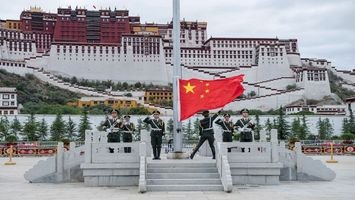
Amid tensions on the outskirts of India, Chinese President Xi Jinping has called for an attempt to build a 'new modern socialist Tibet'.
Earlier, Chinese Foreign Minister Wang Yi had visited Tibet and reviewed the construction works along the border with India.
Xi Jinping, general secretary of the Chinese Communist Party and chairman of China's Central Military Commission, made the remarks at a high-level meeting on Tibet in Beijing.
He said that China needs to make more efforts to maintain stability in Tibet and protect national unity.
China established its control over Tibet in 1950.
Critics who stand with the exiled spiritual leader, the Dalai Lama, say that 'China did bad to the people of Tibet and the culture there'.
At this meeting of senior members of the Communist Party on the future governance of Tibet, Xi Jinping praised the achievements and also praised the officers working on the frontline, but said that to enhance unity in the region, rejuvenate it and More efforts are needed to strengthen.
According to China's official news agency Xinhua, Xi Jinping said in the meeting that 'political and ideological education needs to be emphasized more in Tibet's schools so that the seed of love for China can be sown in the hearts of every youth there'. .
Xi Jinping said that there is a need to strengthen the role of the Communist Party in Tibet and to better integrate ethnic groups.
It is in this context that he said, "We have to resolve to create a united, prosperous, civilized, harmonious and beautiful, modern, socialist Tibet."
He said that 'Tibetan Buddhism also needs to be adapted to socialism and Chinese conditions'.
But critics say that 'if China had really benefited Tibet as much as Xi Jinping claimed in the meeting, then China would not have feared separatism and neither could China help the people of Tibet through education' 'Talks about filling'.
There was talk about Tibet between the US and China tension.
In July, US Secretary of State Mike Pompeo said the US would restrict the visa of some Chinese officials to Tibet to "prevent diplomatic access and engage in human rights abuses".
He also said that the US supports the "meaningful autonomy" of Tibet.
When and how did Tibet come under Chinese occupation?
This remote area of people who predominantly follow Buddhism is also known as the 'roof of the world'. Tibet is recognized as an autonomous region in China.
China says the region has had sovereignty over the centuries, while many Tibetans hold their loyalty to their exiled spiritual leader, the Dalai Lama.
When his followers see the Dalai Lama as a living God, China considers him a separatist threat.
The history of Tibet has been very turbulent. Sometimes he lived as a self-occupied territory, sometimes by the powerful dynasties of Mongolia and China.
But in the year 1950, China sent thousands of soldiers to wave their flag on this area. Some areas of Tibet were converted into autonomous areas and the remaining areas were merged with the Chinese provinces adjoining it.
But after a failed rebellion against China in 1959, the 14th Dalai Lama had to leave Tibet and seek refuge in India, where he formed the government in exile.
Most of Tibet's Buddhist viharas were destroyed during the Cultural Revolution of China in the sixties and seventies. Thousands of Tibetans are believed to have been killed during Daman and military rule.
When did China Tibet dispute start?
The dispute between China and Tibet concerns the legal status of Tibet.
China says that Tibet has been a part of China since the middle of the thirteenth century but Tibetans say that Tibet was an independent state for many centuries and that China did not continue to possess it.
The Mongol dynasty Kublai Khan had established the Yuan Dynasty and extended his kingdom not only to Tibet but also to China, Vietnam and Korea.
Then in the seventeenth century China's Ching dynasty had relations with Tibet.
The Ching army annexed Tibet after 260 years of relationship, but within three years it was repulsed by the Tibetans, and in 1912 the Thirteenth Dalai Lama declared independence of Tibet.
Then in 1951 the Chinese army once again controlled Tibet and signed a treaty with a Tibetan delegation under which the sovereignty of Tibet was ceded to China.
The Dalai Lama fled to India and has been fighting for Tibet's autonomy ever since.
When China annexed Tibet, it was completely cut off from the outside world. After this, the Chineseization of Tibet started and the language, culture, religion and tradition of Tibet were all targeted.
Is Tibet a part of China?
There are many questions related to Sino-Tibet relations which often come to the mind of the people. Like is Tibet a part of China? What was Tibet like before China came under control? And what changed after that?
The Tibet government-in-exile says, "There is no dispute that Tibet has been under the influence of various foreign powers in different periods of history." The Mongols, the Gurkhas of Nepal, the Manchu dynasty of China and the British rulers who ruled India have all had some roles in the history of Tibet. But in other periods of history, it was Tibet that exercised power and influence over its neighbors and these neighbors included China. ''
"It is difficult to find a country in the world that has not had the influence or dominance of any foreign power in any period of history. In the case of Tibet, foreign influence or interference was for a comparatively limited time. ''
But China says that "China has had sovereignty over Tibet for more than seven hundred years and Tibet has never been an independent country." No country in the world ever recognized Tibet as an independent country.
When India considered Tibet as part of China
In June of 2003, India officially agreed that Tibet is part of China.
After the meeting of the then Prime Minister of India Atal Bihari Vajpayee with Chinese President Jiang Zemin, India for the first time considered Tibet as part of China.
At that time the NDA government was led by the BJP in India and the then Prime Minister Atal Bihari Vajpayee was the leader of the BJP. This clearly shows that the proximity of BJP and India with Atal Bihari Vajpayee as Prime Minister started to increase with China. This appears to be a complete change in India's foreign policy. Earlier, the Congress Party government never made such a mistake. The Congress never recognized China's occupation of Tibet and always considered Tibet as an independent country.
Although it was then said that this recognition is indirect, but it was seen as an important step in the relationship between the two countries.
After the Vajpayee-Jiang Gemin talks, China also agreed to trade with India via Sikkim. Then this step was seen that China too has accepted Sikkim as part of India.
Indian officials had said at the time that India has not recognized the whole of Tibet, which is a large part of China, but India has recognized only that part which is considered as an autonomous Tibet region.
Amnesty International, an international non-governmental organization working on human rights, has released its independent inquiry report on the riots in north-east Delhi in February this year.
The report accuses the Delhi Police of not stopping the riots, joining them, refusing to ask for help over the phone, preventing the victims from reaching the hospital, especially assaulting the Muslim community.
Citing intimidation, intimidation of riot victims and peace-loving agitators in the six months following the riots, jailing and registering cases against them, the report also underscores that not a single case of allegations of human rights violations on Delhi Police I have not registered an FIR yet. The Delhi Police works under the Ministry of Home Affairs.
According to Amnesty International executive director Avinash Kumar, "This protection from the power side gives the message that law enforcement officials can violate human rights without accountability." That is, they can run their own law. ''
Before releasing the report, Amnesty International approached the Delhi Police to find its side but no response was received for a week.
In March, Delhi Police Joint Commissioner of Police Alok Kumar, in an interview with BBC Hindi correspondent Salman Ravi, denied the allegation of police being a silent spectator during the riots and said, "If any allegations against police personnel come forward. They will be investigated if they come ''.
Earlier, the Delhi Minorities Commission also released a fact-finding report on the Delhi riots in July.
In this too, many victims had complained of not registering FIRs of police, threatening to compromise and making them accused in other cases by accusing them of violence.
At the same time, the Delhi Police was accused of falsely presenting a riot between two communities instead of plotting to target the Muslim community. The Delhi Police also did not answer any questions from the Commission.
Role of Delhi Police before riots
The report by Amnesty International is based on a study of 50 riot victims, eyewitnesses, lawyers, doctors, human rights activists, conversations with retired police officers and videos of people made.
It first mentions allegations of assault and sexual harassment from students protesting against the Delhi Police's Citizenship Amendment Act (CAA) at Jamia Millia Islamia University on 15 December 2019.
The Delhi Police has opposed the PIL in the Delhi High Court to set up a special investigation team to investigate this incident.
Subsequently, on January 5, 2020, Jawaharlal Nehru University is reported to have vandalized Rods and assaulted nearly two dozen students and teachers.
In this case, even after more than 40 complaints were filed by the students and teachers of JNU, the Delhi Police has not registered a single FIR.
However, FIRs were lodged against some anti-CAA protesters who were injured in the assault, including Aishi Ghosh of JNU Students Union. The report also gives information about the provocative speeches of BJP leaders in several election rallies held in the month of January before the Delhi Assembly elections.
On 26 February 2020, the Delhi High Court orders the Delhi Police to file an FIR against BJP MPs and leaders, Kapil Mishra, Parvesh Verma, Anurag Thakur, under a 'Conscious Decision' (Socha Sekhla Judgment). No FIR has been registered against one of them so far.
In July, in an interview to BBC correspondent Divya Arya, Minority Affairs Minister Mukhtar Abbas Naqvi admitted that inflammatory speeches were wrong, we are against all such statements that are provocative, defame the country and secular character Are going to damage We are against all this. Whatever done, wrong done. I am against him. We have not and should not justify such poisonous statements.
Role of Delhi Police during riots
In the Amnesty International report, many riot victims have claimed in their statements that when they called the emergency number 100 of Delhi Police, no one picked it up or retorted, "Freedom was wanted, now take it Freedom. ''
'What do we want? The slogan 'Azadi' was used in anti-CAA demonstrations and according to the agitators, there was talk of freedom from discrimination and atrocities.
The report includes videos of five young men being shot by police and a conversation with the mother of one of them who claims that her son was jailed for 36 hours from where he died after being released.
According to the mother, he was not given any documents of the custody of the son, nor according to the law, the son was produced before the magistrate within 24 hours of his detention.
The report also details cases of police remaining mute spectators during the riots and in some cases engaging in stone pelting and preventing victims from reaching hospitals.
Most of the 53 people killed in the riots are Muslims and their homes and shops have suffered more damage than the Hindu community.
According to the report, when he spoke to a Hindu caretaker of a school, he did not call for help even after repeated calls to the police, but at the same time adopting a sensitive attitude towards the police, that he could not come to help. There were rioters stopping the way.
The same liberal attitude towards the Delhi Police is also seen in the report 'Daily Writers: Conspiracy Unrevealed', a report of a trust named 'Center for Justice' (CFJ), submitted to Home Minister Amit Shah, describing the riots as anti-Hindu.
Role of police after riots
Unlike earlier reports on riots, Amnesty International's investigation also looks into the police investigation after the riots and accuses them of arresting and taking large numbers of Muslims after the riots.
Citing the arrests of human rights activist Khalid Saifi for demonstrating in February, it has been claimed that he was in a wheelchair in March due to his treatment in police custody.
Saifi has been in jail for six months. He has been arrested under UAPA law.
The report contains statements of several riot-victims, including allegations of torture at the hands of the police and forcibly making false statements, coercion, signing blank paper.
There is also a statement by the lawyer of a non-governmental organization, 'Human Rights Law Network', which accuses him of preventing him from talking to his client, misbehaving with the police and lathicharge.
On July 8, an order of the Delhi Police, which wrote that the arrests related to the Delhi riots "need to be taken care of" so that it does not "hurt Hindu sentiments", but the Delhi High Court lambasted the police. .
The court had not quashed the order, but argued that "the investigating agencies have to take care that there is no discrimination against the instructions given by the senior officers which is wrong under the law".
Amnesty International has demanded with the details of the last six months that the investigation and accountability of the action of the Delhi Police should be fixed and the Police Department should be trained to work in times of communal tension and violence.
The Delhi Police's response to the allegations made in this report is awaited. The report will be updated on getting a statement from the police.
Copyright © 2026 SHAHEEN BAGH NEWS All rights reserved. Powered by USMAN EDUCATION AND WELFARE SOCIETY. The SHAHEEN BAGH NEWS is not responsible for the content of external sites. Read about our approach to external linking