Special

UN: Saudi Arabia must accept responsibility for Khashoggi murder

UN extrajudicial executions investigator Agnes Callamard on Wednesday released her report into the killing of dissident journalist Jamal Khashoggi in the Saudi consulate in Istanbul.

In an exclusive interview with Al Jazeera, she said the dismemberment of Khashoggi was discussed before his killing on October 2, and added that it was important to insist the execution was a killing by the Saudi Arabian state.

Callamard also said Riyadh should take steps to ensure such abuse of diplomatic privileges to commit an international crime was not repeated.

Does YouTube enable hate speech?

A spat between two popular YouTubers is calling into question how the company handles harassment on its platform.

Carlos Maza, host of the Vox series Strikethrough, is routinely the object of right-wing vlogger Steven Crowder’s ire. Last month, Maza tweeted a video compilation of all the bullying he says he’s received from Crowder. In a series of follow-up tweets, Maza argued that Crowder’s videos directly violate YouTube’s harassment policy which prohibits “content that is deliberately posted in order to humiliate someone”.

The controversy has sparked backlash by members of the LGBT community who are angered by YouTube’s decision to allow Crowder’s homophobic videos to stay on the platform.

"YouTube has always been a home for so many LGBTQ creators and that's why it was so emotional, and though it was a hard decision, it was made harder that it came from us because we've been such an important home," said YouTube CEO Suan Wokjcicki during her response to a question by an LGBT reporter at CodeCon, an annual technology conference.

Meanwhile, LGBT activists are pointing out the hypocrisy of YouTube celebrating LGBT Pride Month by changing its avatar on Twitter to reference the rainbow flag, a symbol associated with the pro-gay rights movement.

So is YouTube harboring harassment or an online home for free speech? We ask our panel that very question on this episode of The Stream.

Libyan MP: Haftar, the 'axis of evil' and the battle for Libya

Libya has been mired in conflict and violence since the country's 2011 civil war that toppled and later killed longtime dictator Muammar Gaddafi.

The oil-rich nation is now divided, with a UN-recognised but weak administration in the capital Tripoli overseeing the country's west and a rival government in the east aligned with the self-declared Libyan National Army led by renegade military commander Khalifa Haftar.

Libyan MP and former foreign minister Aly Abuzaakouk and Haftar lived in exile in the US "for many years together as acquaintances, as friends ... in Fairfax", and also knew Gaddafi during his school days. They'd both "suffered from the ruthless regime" of Gaddafi.

But after Hafter went back to Libya and "started to build his own entourage", Abuzaakouk "realised this is not a person I would continue to have a relationship with ...  He is a man who believes he is worthy of controlling Libya and he always would speak about the need for a strong force to control Libya."

In April, Haftar launched a military offensive against the government in Tripoli and vowed to fight until Tripoli 'militias' were defeated.

But according to Abuzaakouk, Haftar's "base of support in the east is not as it used to be". In an interview with Al Jazeera, he said that opposition to Haftar has grown after the assault on Tripoli, with tribes now openly opposing him and "calling for reconciliation with the rest of the country".

"Many forces have come together ... to support Tripoli, and the militia in Tripoli also defended their city ... They stopped the forces of Haftar and now they are hitting them back," he added.

But while support for Haftar might be waning inside Libya, he still has strong backers outside the country, says Abuzaakouk.

"The former president of Tunisia spoke about the axis of evil. Abu Dhabi, the Saudis and the Egyptians ... This axis of evil has a mandate to work against the success of the Arab Spring," he said.

"I think the international community have to realise they have supported Haftar with weapons against the United Nations Security Council resolutions. Everybody knows ... that there are arms coming from … at least Abu Dhabi and Egypt to Mr Haftar."

UN Secretary-General Antonio Guterres recently appealed to all countries to enforce the arms embargo against Libya saying the issue is "of immediate importance in de-escalating the current situation" and "of critical importance to the protection of civilians and the restoration of security and stability in Libya and the region".

As Libya's ongoing crisis is still being deliberated in the international community, Abuzaakouk believes that the world at large failed the once wealthy African nation. "Getting rid of Gaddafi was step number one. Building Libya to really restructure itself was step number two and the world community at large left Libya alone and that, I think, was a great mistake."

"Life in Benghazi and in Derna is unbearable, it's worse than the days of Gaddafi. There's no freedom of speech, there's no freedom of law, there are a lot of killings, extrajudicial killings ... I'm very clear that the war crimes committed by Haftar or others should be investigated," said Abuzaakouk.

"There are now forces in Washington, in The Hague to really follow up on the war crimes that have been committed in Libya … the Libyans deserve to have some of the criminals be brought to justice.”

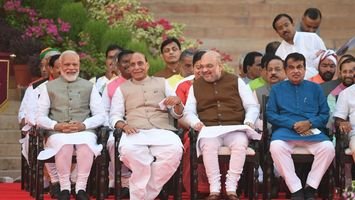
India is not the fastest growing economy

India's economy has grown at the slowest pace in the last five years. This is clear from recent figures released by the Government of India.

These reports show that the figures could be a problem for Narendra Modi, the second time Prime Minister became a troublemaker.

Economic growth in the last financial year April 2018 to March 2019 is 6.8%. At the same time, from January to March, the rate remained only 5.8%. This rate has been behind China's growth rate for the first time in the last two years.

This means that India is no longer the fastest growing economy. It will prove to be a major challenge for India's finance minister Nirmala Sitharaman. Nirmala Sitharaman has taken over the ministry of Commerce and Defense in the first tenure of the Modi government.

The current challenge to the Modi government is that they can bring back the confidence of the people towards the economy. The Modi government has to reconcile between its Short Term and Long Term Policy.

The government's first challenge will be employment.

The Modi government was surrounded by the issue of the highest employment during its first term. According to the government report, unemployment during the year 2017-18 is the highest in the 45 years.
The experts believe that the government needs to focus on labor-sector such as building construction and textile industry so that employment can be created with immediate effect. Apart from this, the government should also work on industries like health care to enable long-term jobs to be created.

Curved export also creates a major hindrance in the way of employment.

The US has ended India's special trade status since June 5, 2019. India exports 16 percent of India's total exports. In such a way, India's economy will have a bad effect. This will increase unemployment.

The United States has banned Iran from May 1, 2019. India can not import petroleum from Iran now India used to import most petroleum from Iran, which was used by India in its currency. India has been trapped in big trouble due to restrictions on Iran. India will now have to pay in dollars for petroleum. Rupee is at 69.58 level compared to the same dollar. Rupee and will fall below. This will increase inflation.

At the new GDP rate, it is clear that India's economy is rapidly falling below.

The biggest factor in China's economic growth of India is the domestic consumption here. Domestic consumption has played the most important role in increasing the economy for the past 15 years. But with recent data, it is clear that the ability of consumers to buy has decreased.

Sales of cars-SUVs have reached the lowest point of last seven years. Sales of tractors, motorcycles and scooters have also declined. The demand for borrowing from the bank has also increased rapidly. In the recent quarters, the income growth of Hindustan Unilever has also come down. Given these facts, it can be understood that the purchasing power of the consumer has come down.

The BJP promised in its manifesto that it would cut income taxes to ensure more cash and more purchasing power in the hands of the middle income families.

Gaurang Shetty, Vice President of a brokerage company believes that the government should also cut personal and corporate tax in its next budget (July).

They say that these steps will work as a stimulant for the economy.

But the difference between India's 3.4% budget deficit, i.e. government expenditure and revenue, can prevent Modi government from doing so.

Experts believe that increasing financial losses can stop short and long term growth.

The growing agricultural crisis in India was one of the biggest challenges of Narendra Modi for his first term. Farmers from all over the country, including Delhi-Mumbai, have come to the streets demanding a fair price for their crops on many roads in India.

The BJP had decided to give 6,000 rupees annually to select farmers in its first government, although the Modi government has implemented this scheme for all farmers in the first Cabinet meeting of its second term.

This plan will provide relief for some time, but this will not work in a long time. There is a need to improve the structure of the agricultural sector.

At present, farmers sell their crops to state government agencies. Whereas farmers should be able to bargain directly in the market.

One of the BJP's election promises was that it would spend 1.44 trillion dollars on railways, roads and infrastructure. But where will such a huge amount come from? Knowledgeable believe that Modi can take the path of privatization for it.

In his first tenure, Modi has worked slow on his promises to sell government enterprises. Air India has long been in debt. The government started the process of selling its shares, but no buyer was found and Air India could not be sold.

Private investment has been lagging behind for the past few years and in the last decade, India's impressive economic growth is largely on government spending.

In his first government, Narendra Modi made a few reductions in the licensing rule, with the help of which India was able to reach the 77th position in the World Bank's mercantile list, which was 134th in the year 2014.

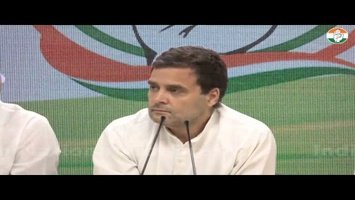
Narendra Modi is losing the election: Rahul Gandhi

LIVE: Congress President Rahul Gandhi addresses media at Congress HQ

Surgical Strike hero LT General (Retd) DS Hooda presents the national security report

Surgical Strike hero LT General (Retd) DS Hooda presents the national security report

LIVE: AICC Press Briefing By Kapil Sibal at Congress HQ on Note Bandi Scam

LIVE: AICC Press Briefing By Kapil Sibal at Congress HQ on Note Bandi Scam

Congress President Rahul Gandhi addresses media on Minimum Income Scheme

Congress President Rahul Gandhi addresses media on Minimum Income Scheme

Congress President Rahul Gandhi addresses media after CWC meeting at Congress HQ

Congress President Rahul Gandhi addresses media after CWC meeting at Congress HQ

LIVE: Congress President Rahul Gandhi addresses the national convention of AICC Minority Department

LIVE: Congress President Rahul Gandhi addresses the national convention of AICC Minority Department, Jawaharlal Nehru Stadium, New Delhi